A wallet can be put at risk when someone else gains access to the computer used to control it. In a report published on November 11, 2026, TechFlow, citing The Block, said Scotland’s High Court sentenced Robert Barr to eight years in prison for directing an attempted crypto theft from inside an Edinburgh prison. The targeted assets were valued at about £2 million (approximately $2.7 million). The attempt described in the report failed; it does not establish a loss of that amount.
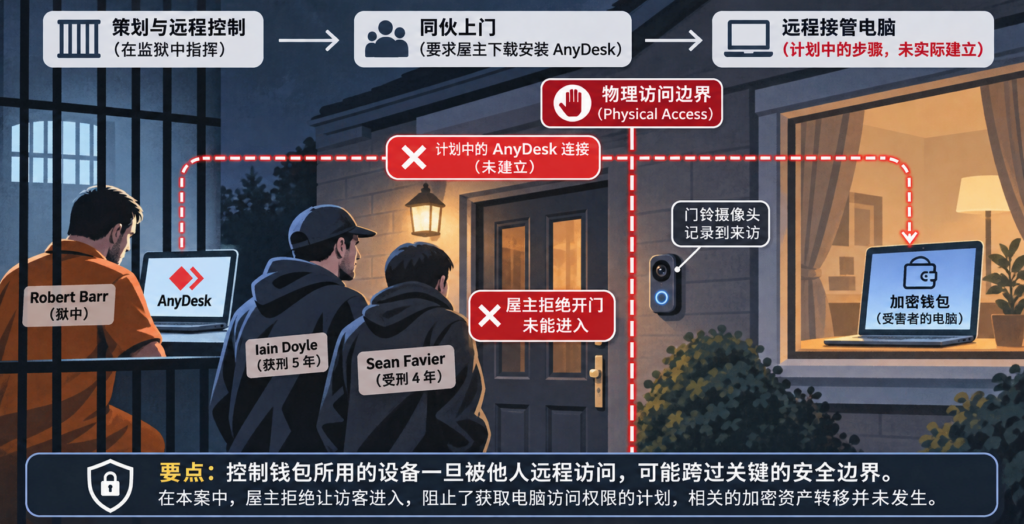
According to the account presented in court, Barr’s plan was for Iain Doyle and Sean Favier to enter a couple’s home and have them download AnyDesk remote-control software. Barr would then control the couple’s computer from prison and enter an address he controlled to move funds from their wallet. Doyle and Favier arrived at the home at about 11:30 p.m. on April 17, 2024, but a doorbell camera recorded them, the residents refused to open the door, and the two could not get in.
Doyle received a five-year sentence and Favier a four-year sentence. All three had previously pleaded guilty to involvement in serious organised crime. Police seized Barr’s phone on June 25, 2024, and found detailed messages directing the other two men. Judge Lord Cubie described the plot as combining modern computer technology with old-fashioned housebreaking. He said Barr’s organisation of the plot while imprisoned for crypto-related fraud was a significant aggravating factor, and that a conviction after trial would have warranted eight years and ten months. At the time of the November 11 report, Barr was due to attend a serious crime prevention hearing on November 17.
The custody lesson is limited but clear: remote access to the device used for a wallet can cross a critical security boundary. In this case, the residents’ refusal to admit the visitors stopped the reported plan before that access was obtained.
Source: techflowpost.com (originally published 2026-11-11 21:19 UTC+8)