
If you hold assets that an issuer or network administrator can freeze, access depends partly on decisions made outside your wallet. That is the custody question at the center of an analysis published on November 19, 2026, following what the article describes as a theft of more than $6 billion from Binance. The supplied account does not independently establish that loss figure; it attributes the figure to a public claim by U.S. Senator Cynthia Lummis.
The article, written by ChainArgos founder Jon Reiter, says Binance paused withdrawals for about two days and that Circle, Tether and the Arbitrum Security Council acted to freeze assets. Its central argument is that those decisions were made without the proposed Clarity Act in force. Reiter sees the episode as evidence of how much practical control centralized organizations can exercise during an on-chain emergency.
What the proposed law might have changed
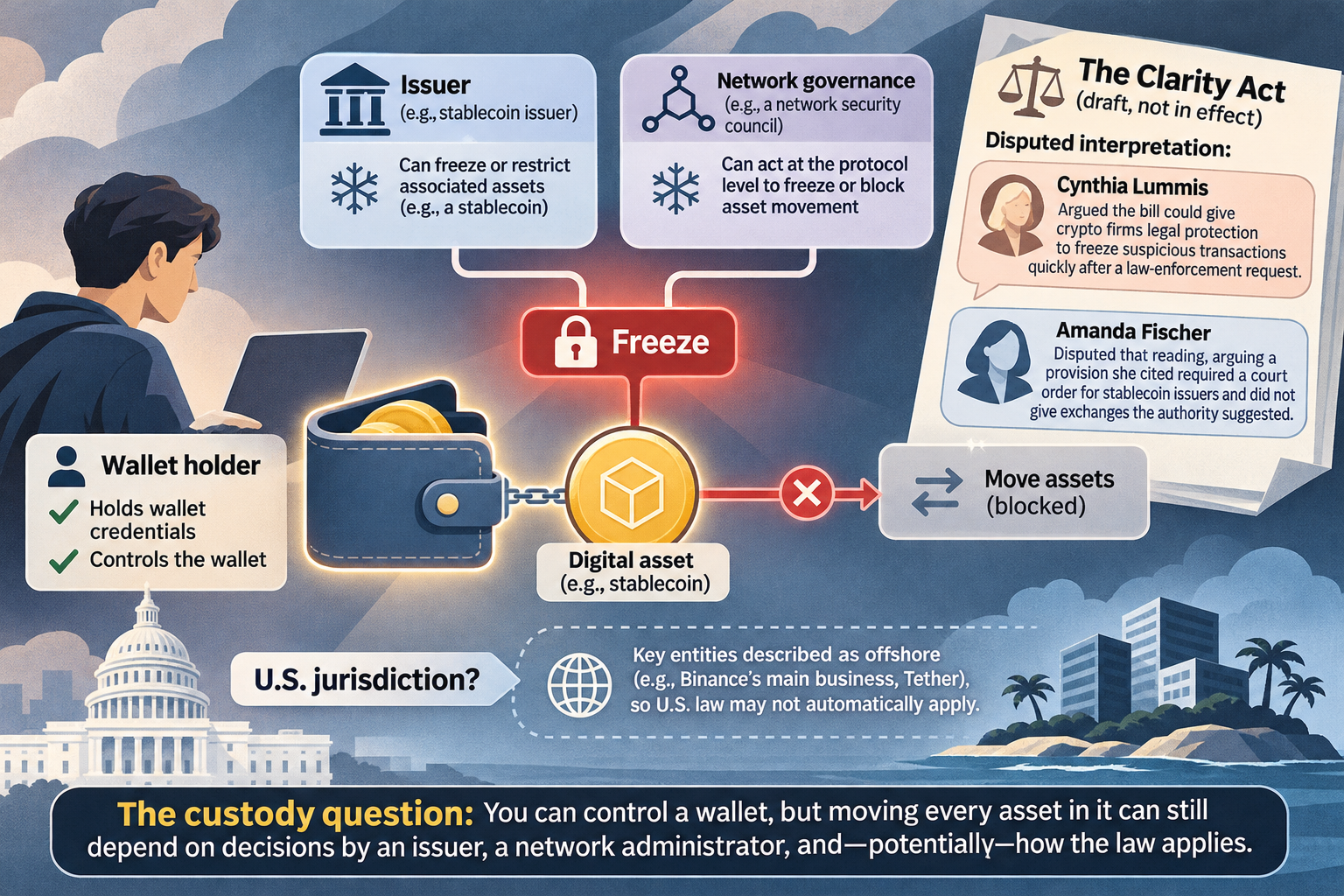
Lummis argued that the Clarity Act could have given crypto firms legal protection to freeze suspicious transactions quickly after a request from law enforcement. Amanda Fischer, policy director and chief operating officer of Better Markets, disputed that reading, arguing that a provision she cited required a court order for stablecoin issuers and did not give exchanges the authority Lummis suggested.
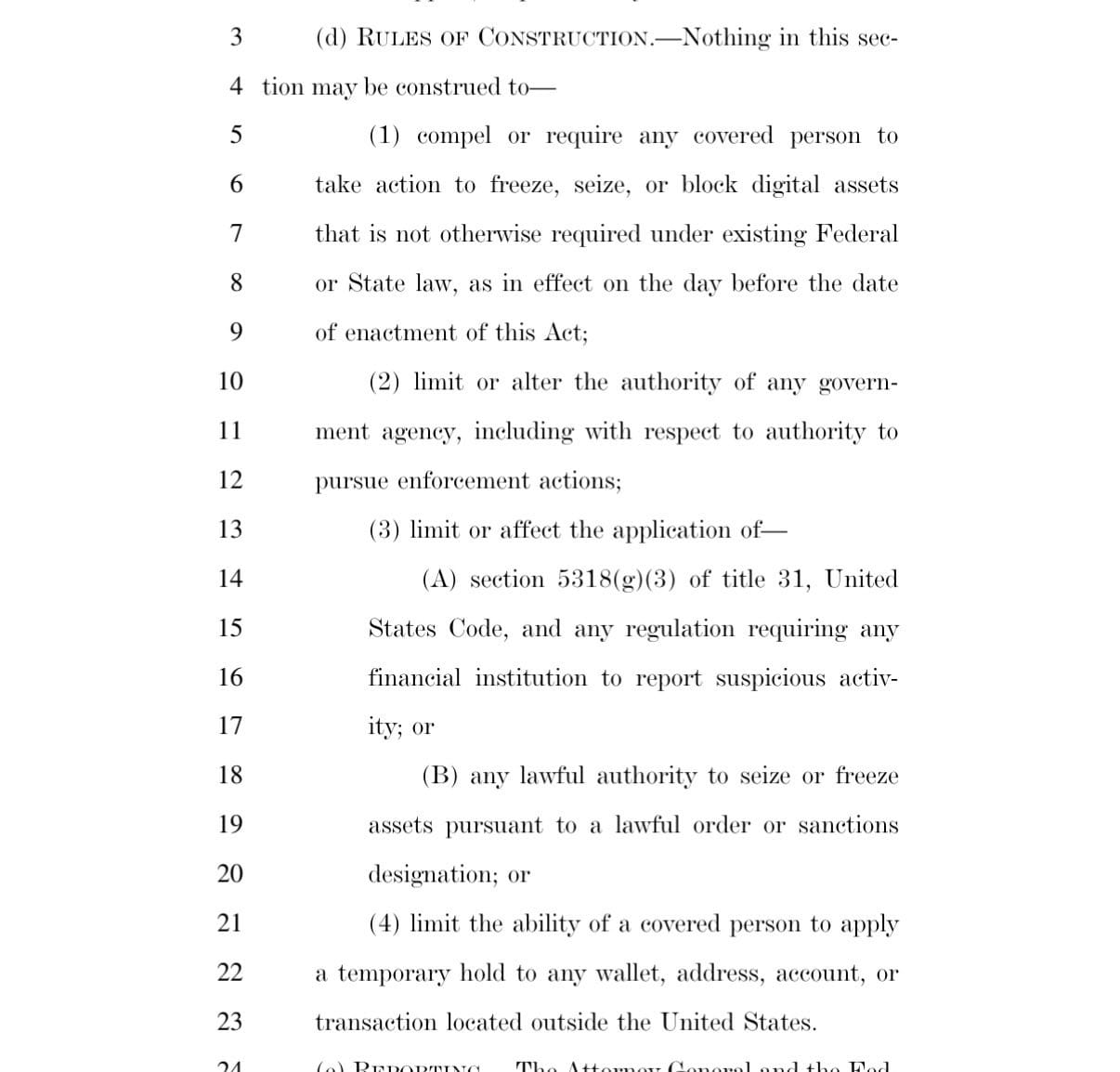
Reiter offers a narrower reading of their disagreement: he says Section 305 of a Senate draft would have allowed temporary holds by stablecoin issuers and digital-asset service providers following a written law-enforcement request, with protection from civil liability. That is his interpretation of a proposal, not a description of an enacted rule or a judicial finding. He also argues that the organizations’ reported actions cannot be credited to a law that was not in effect.
The jurisdiction question
Reiter challenges the assumption that a U.S. law would automatically govern Binance’s main business or Tether. He points to Binance’s commitment to leave the U.S. market under its 2023 settlement, while distinguishing the smaller Binance.US business. He similarly describes Tether as offshore. These are arguments about the reach of U.S. jurisdiction, not proof that either organization could never face U.S. legal pressure.
For holders, the practical distinction is between controlling a wallet and being able to move every asset in it at every moment. As the reported freezes illustrate, an issuer or other organization with relevant controls may affect access even when a holder retains their wallet credentials. The article does not show that such intervention is guaranteed in a future theft—or that a proposed law would make it faster.