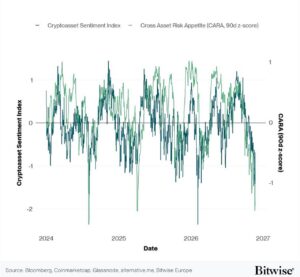
Bitcoin’s hash rate, a measure of the computing power miners contribute to the network, was 8% lower on November 24, 2026, than a year earlier, according to Glassnode. It had remained below year-ago levels since late July, marking the first year-over-year decline since China’s 2021 mining ban. Glassnode attributed this decline to price pressure rather than government restrictions.
The shorter-term picture was different. After Bitcoin’s most recent mining difficulty adjustment, the seven-day average hash rate rose 7.8% in the week leading up to November 24, according to Luxor.
Mining revenue and operating costs
Luxor put hashprice, the daily revenue a miner earns per unit of computing power, at $29.36 per petahash per second, down from $30.27 a week earlier. On November 20, it had touched about $27.70, close to its June low. Luxor said a hashprice near $29 was at or below break-even for many operators, depending on their electricity costs and the hardware they ran.
The April 2024 halving cut the block subsidy from 6.25 BTC to 3.125 BTC. By the November 25 report, CoinMarketCap put Bitcoin at about $60,004, or 52.6% below its October 6, 2025 high of $126,080. With the lower subsidy and the subsequent price decline, some less efficient machines were no longer profitable. An industry source said some miners shut down older rigs, while others redirected power and data center capacity to artificial intelligence and high-performance computing.
Sector reports described different uses for proceeds from Bitcoin sales. MARA raised about $1.1 billion from sales after September 2026 and used $750 million to pay down Bitcoin-backed loans. Riot sold 20,264 BTC through September, primarily to fund data center development.
Separately, market data showed $2.37 billion in net outflows from U.S. spot Bitcoin exchange-traded funds over five days and a further $569.7 million on November 23. Net outflows over the preceding month totaled $4.91 billion.
Why Luxor expected difficulty to rise
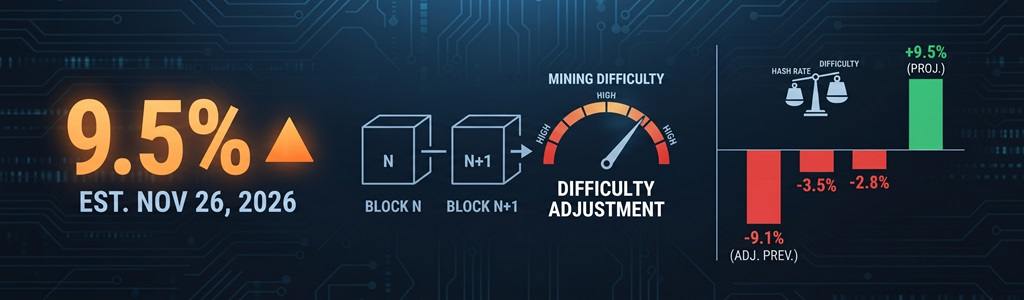
Bitcoin adjusts mining difficulty every 2,016 blocks, roughly every two weeks, to keep the average interval between blocks near ten minutes. The last adjustment lowered difficulty by 9.1%, the third cut larger than 9% in 2026, according to mempool.space data.
Following the hash rate rebound, Luxor estimated that difficulty would rise about 9.5% at the next adjustment, expected around November 26, Thanksgiving Day in the United States. That estimate depended on miners continuing to produce blocks at the observed pace; the adjustment had not yet occurred.