A valid signature does not necessarily mean a contract call is safe. In an analysis published on May 14, 2026, SlowMist reported that an attacker used their own signature to change a ShapeShift FOX Colony router’s configuration on Arbitrum and drain assets held by the contract. The report places the attack in May 2026 but does not give a more precise attack date.
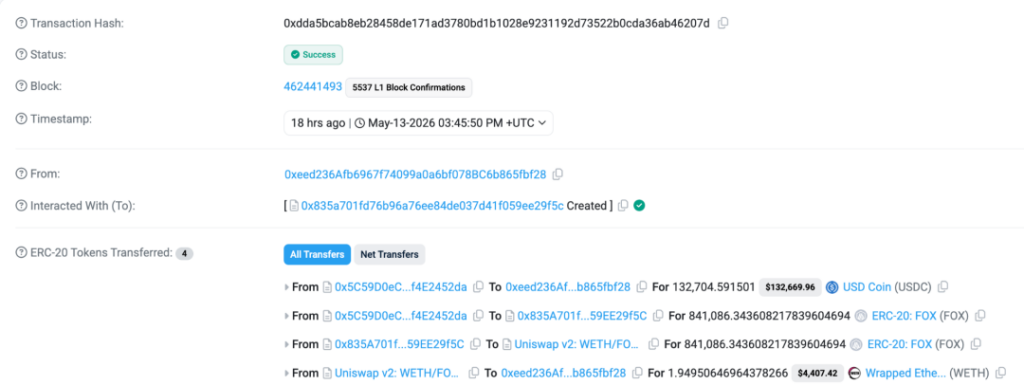
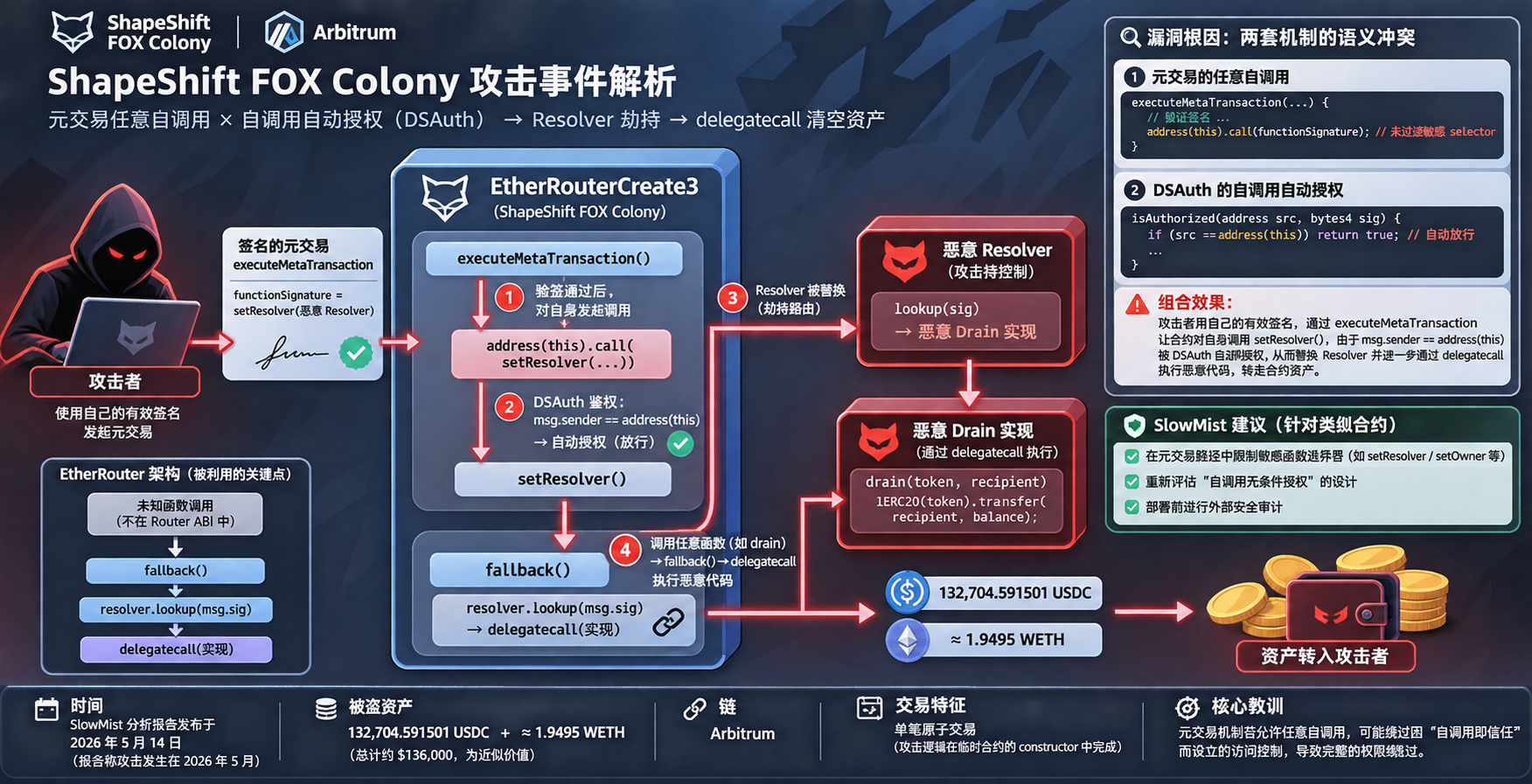
SlowMist reported that the attacker obtained 132,704.591501 USDC and approximately 1.9495 WETH, worth about $136,000 in total. Its analysis describes one atomic transaction, with the attack sequence executed through a temporary contract’s constructor.
Where the authorization boundary failed
The affected EtherRouterCreate3 contract used a resolver to select implementations for calls it did not handle directly. According to SlowMist’s analysis of decompiled code, its executeMetaTransaction implementation verified a signature and then made a call to the router itself using the signed function data. It did not exclude the sensitive setResolver function.
The attacker signed a call to set a resolver they controlled. When the router made that self-call, its authorization logic treated the router itself as an authorized caller. That combination let the attacker replace the resolver without forging a signature or being the router’s owner.
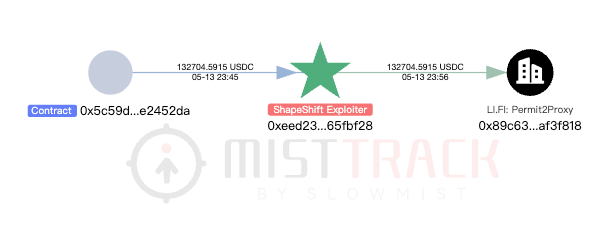
The replacement resolver then directed a call to attacker-controlled drain code. Because the router executed that code with delegatecall, the code operated in the router’s context and could transfer tokens held by the router. SlowMist traced a direct transfer of 132,704.591501 USDC to the attacker’s address. It also reported that another token taken from the contract was swapped for 1.949506469643782660 WETH, which went to that address. The reported $136,000 figure is an approximate value, not a separate asset transfer.
SlowMist said its MistTrack analysis linked the attacker address’s initial gas funding to Tornado Cash and identified later activity involving Spark.fi Saving and Tornado Cash. Those tracing claims are distinct from the token transfers described in the exploit sequence.
For teams reviewing similar contracts, the failure mode is specific: a meta-transaction function that permits arbitrary self-calls can undermine access controls that automatically trust calls from the contract itself. SlowMist recommended restricting sensitive function selectors in the meta-transaction path, reconsidering unconditional self-call authorization, and obtaining an external security audit before deployment.