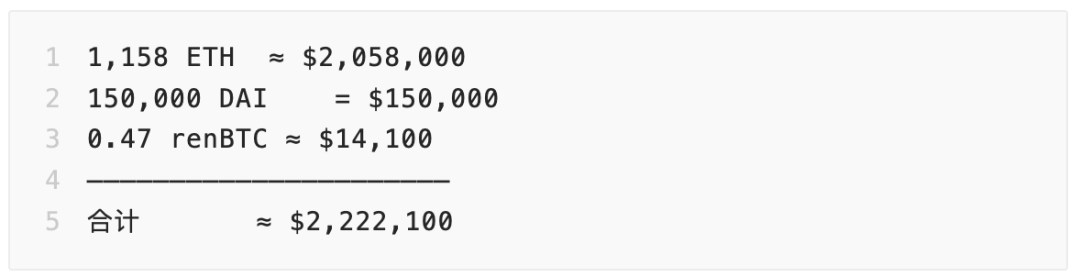
For anyone relying on a custody system, the important question is not only whether a proof verifies, but whether the rules behind that proof establish who may withdraw. In an analysis published on June 18, 2026, SlowMist reported that an attacker exploited Aztec Connect’s escape-hatch path to withdraw approximately $2.22 million in assets from its Ethereum RollupProcessor contract.
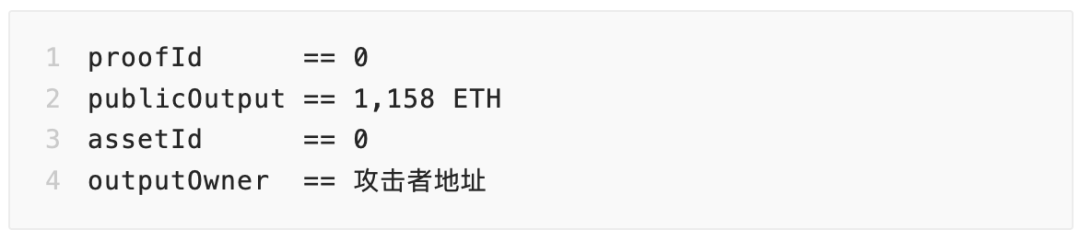
SlowMist identified three attack transactions: 1,158 ETH, 150,000 DAI and 0.46963295 renBTC. It valued the ETH at approximately $2.06 million and attributed all three withdrawals to an externally owned account, 0x6952d9246e9aFE8B887B2877225163436F78E97F, calling the RollupProcessor at 0x737901bea3eeb88459df9ef1be8ff3ae1b42a2ba.
Where the checks diverged
According to SlowMist, the public escapeHatch() function checked whether the escape hatch was open, then passed the submitted proof into rollup processing. Unlike the ordinary processRollup() path, it did not check rollup-provider authorization or a provider signature. The attacker’s calls supplied empty signatures and viewingKeys values.
SlowMist said the deeper flaw was a missing equality constraint in the join-split proof circuit. A Merkle root used internally to establish a private note’s membership could differ from the root exposed as a public input for comparison with the on-chain data root. In SlowMist’s account, this let the attacker use a fabricated tree containing a note for 1,158 ETH while presenting the actual on-chain root to the Solidity check.
The TurboVerifier accepted the submitted escape-hatch proof, SlowMist reported. That establishes that the proof satisfied the circuit’s mathematical constraints—not that the withdrawal was authorized. SlowMist said the RollupProcessor then used the proof’s output amount, recipient and asset identifier to execute the withdrawal without an independent Solidity-level check of the recipient’s entitlement or withdrawal limit. The same path was used for the DAI and renBTC withdrawals.

What the tracing showed at publication
SlowMist’s MistTrack analysis reported that 802 ETH, the 150,000 DAI and the renBTC remained at the attacker’s main address at the time of its report. It reported transfers of 300 ETH to 0x15930a0fef3421f48c6553b5691682cc1b22edb3 and approximately 56 ETH to another address it labeled as associated with the exploiter. Those are SlowMist’s tracing findings as of June 18, 2026, not a claim about where the funds are now.
The case illustrates a specific trust boundary: a verifier can correctly validate a proof against its circuit while a missing circuit constraint or downstream authorization check still permits an improper withdrawal. SlowMist recommended a focused audit of zero-knowledge constraint paths.