Holding your own keys gives you direct control, but it also leaves you responsible for protecting them—and for deciding who knows you hold them. In a report published on November 11, 2026, PANews examined why some large Bitcoin holders were exchanging directly held BTC for shares of BlackRock’s IBIT, and why other holders see that move as a different kind of risk.
The risks behind the custody decision
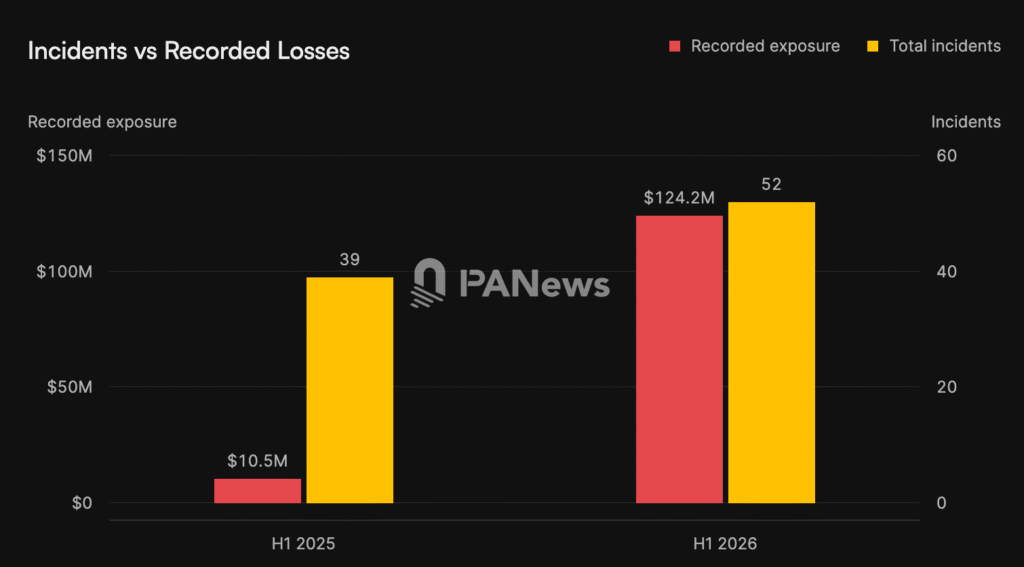
The report cited CertiK figures recording 52 violent attacks against crypto holders worldwide in the first half of 2026, up 33.3% year over year. CertiK put the recorded funds exposed in those incidents at about $124.1 million, versus $10.5 million a year earlier; 33 of the incidents were in France. Funds exposed should not be read as confirmed losses.
PANews also described reported hardware-wallet and exchange security incidents. It attributed more than $100 million in stolen funds to an earlier key-generation flaw affecting Coldcard, reported unauthorized hardware implants in Ledger devices sold through the CryptoBilis channel, and said Trezor had confirmed suspicions of similar tampering in devices sold through that channel. Its estimate of up to $93 million in related losses was an estimate, not a verified total. The report also described major incidents involving Bitget and Binance without providing a breakdown of confirmed losses.
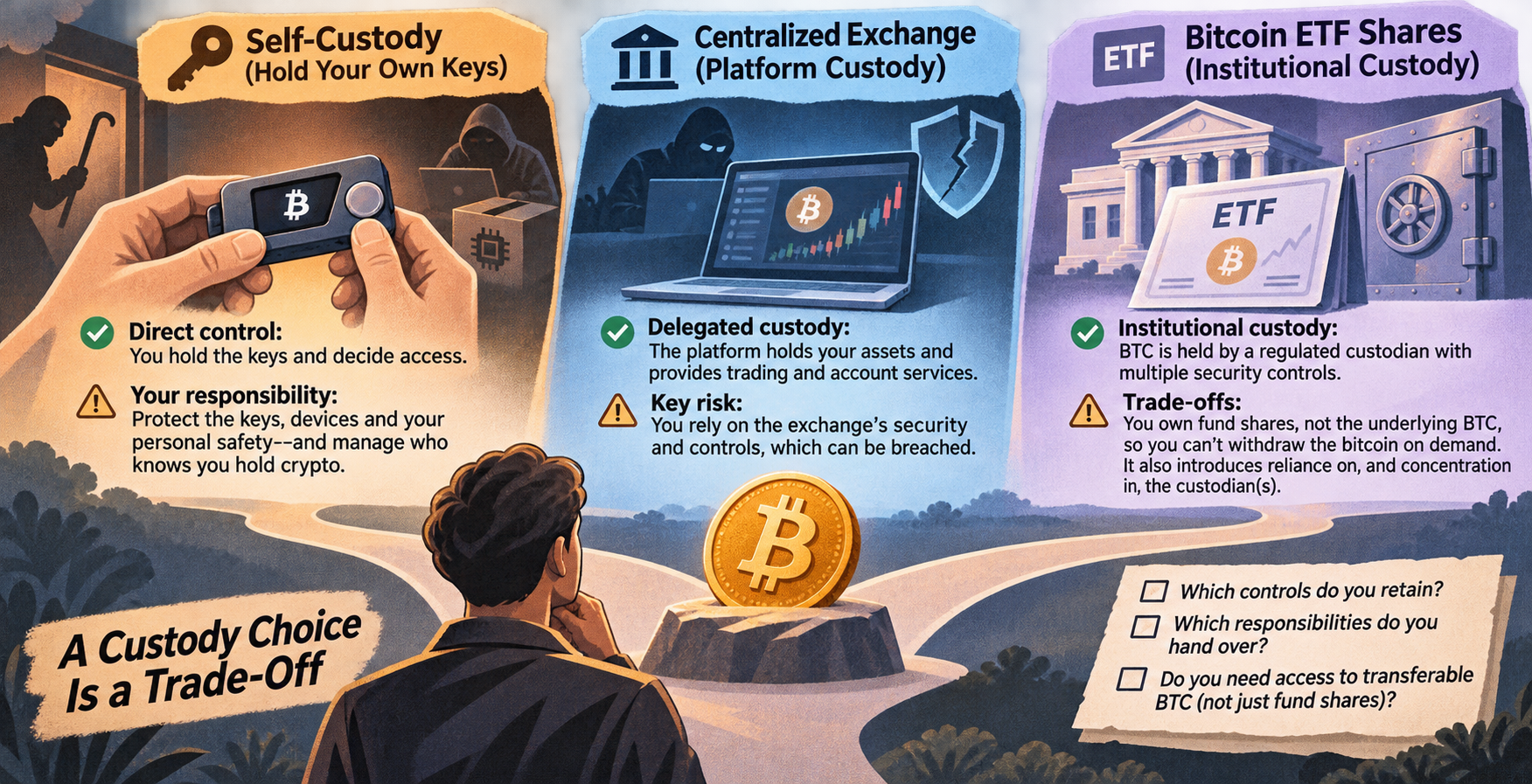
These accounts illustrate distinct trust boundaries: keeping a key offline does not by itself address a compromised device or a threat to its owner; leaving assets with an intermediary introduces reliance on that intermediary’s controls.
What an ETF changes—and what it does not
BlackRock digital-assets head Robbie Mitchnick said security and peace of mind were leading reasons clients gave for converting directly held BTC into IBIT shares. He said BlackRock had recorded about $3.6 billion in such in-kind conversions since regulators approved the mechanism in 2025, while cautioning that the actual total might be higher because BlackRock does not handle or see every conversion. According to Mitchnick, the minimum conversion size had fallen from roughly $30 million to around $1 million–$2 million.
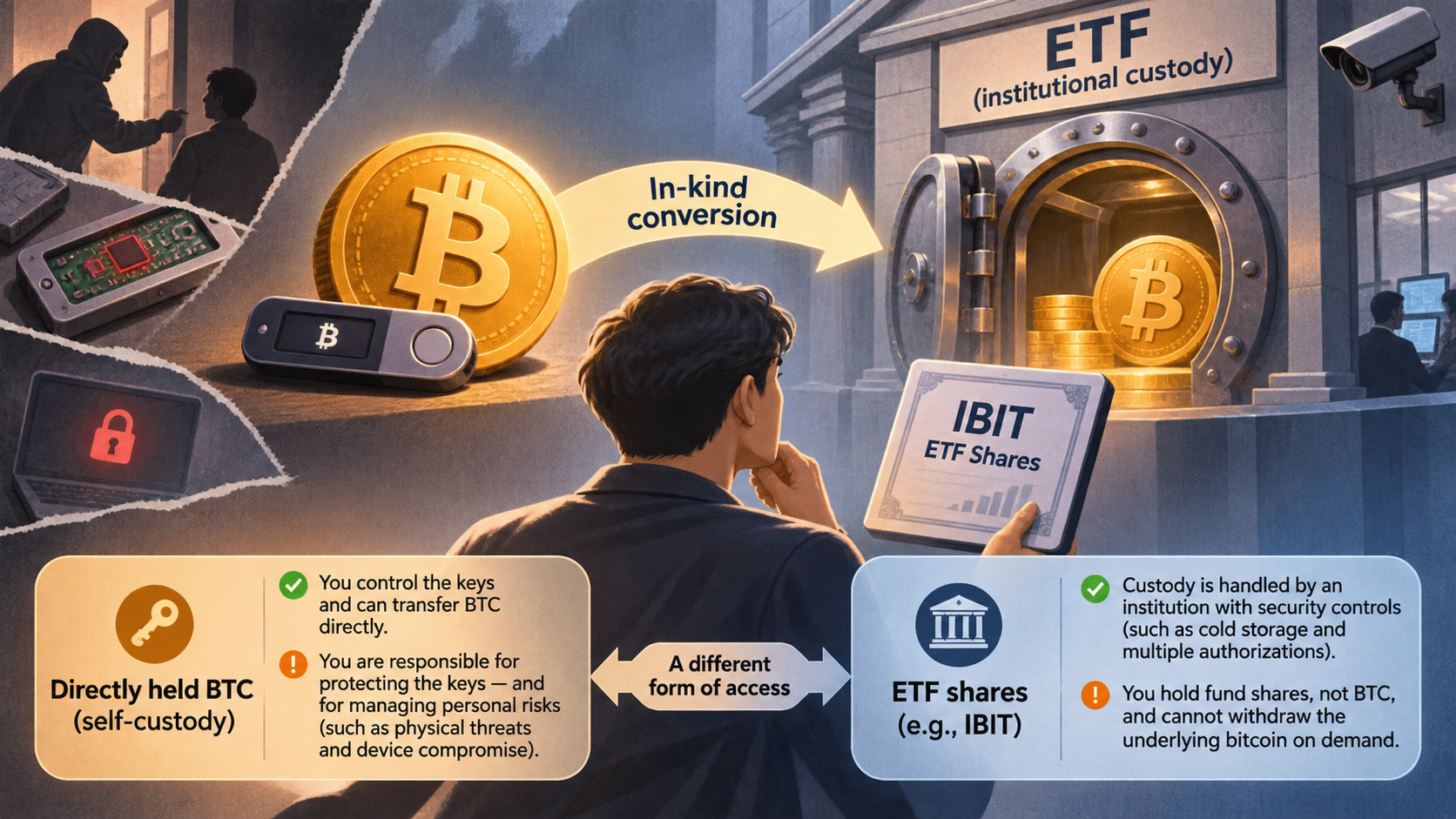
An ETF shifts custody away from the individual; it does not give a shareholder the ability to withdraw the underlying bitcoin on demand. Bitwise chief investment officer Matt Hougan argued that institutional cold storage, multiple authorizations and restricted transfer destinations add safeguards for long-term holders. He also noted that, while ETF shares can trade during market hours, the underlying bitcoin is moved only once a day. That makes ETF shares different from BTC held for immediate transfers.
The counterargument is about control and concentration. Self-custody advocates cited by PANews warned that institutional custody can reintroduce the possibility of asset freezes or restrictions. Coinbase said it held about 90% of the Bitcoin ETF custody market, raising a shared-custodian concern even when investors own shares in different funds. OneKey founder Yishi warned about concentrated custody and suggested independent verification of transaction details on a trusted device. His suspicion that IBIT could be a North Korean target was a concern he raised, not a confirmed attack plan. Coinbase, for its part, said its vault assets used cold storage and on-chain segregation, alongside controls including key sharding, transfer limits and abnormal-activity monitoring.
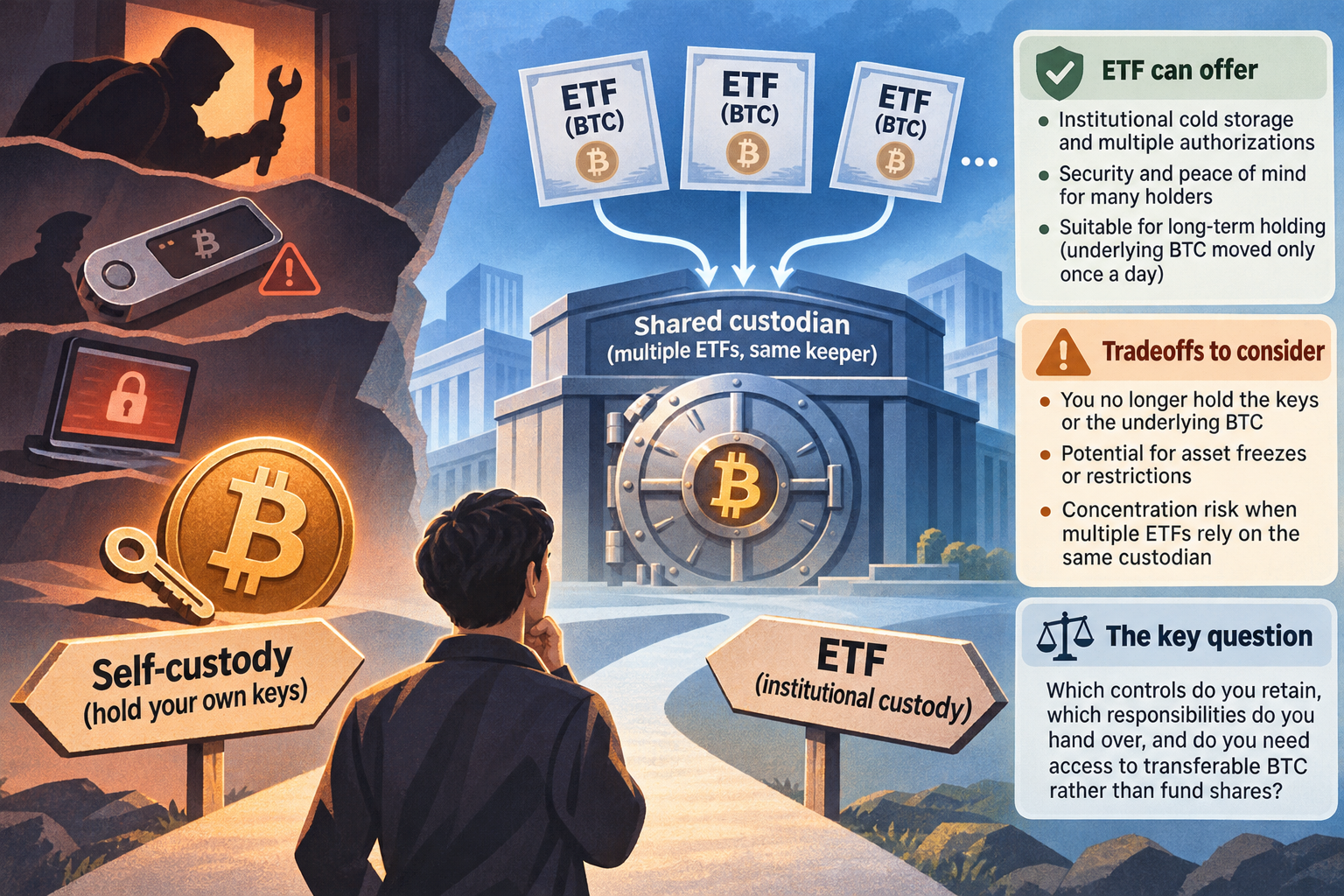
For holders weighing these options, the useful question is not whether one label—self-custody, exchange or ETF—guarantees safety. It is which controls they retain, which responsibilities they hand over, and whether they need access to transferable BTC rather than fund shares.
Source: panewslab.com (originally published 2026-11-11 16:40 UTC+8)