
Keeping a Bitcoin node updated matters for more than coin custody. In reporting published November 12, 2026, at 00:58 (UTC+8), Decrypt described three Bitcoin Core vulnerabilities that had already been fixed. The reported risks involved disrupted node operations and weakened privacy protections—not a way to steal coins or create unauthorized Bitcoin.
The most serious flaw, CVE-2025-62861, could affect block-template creation. According to the Bitcoin Core advisory described by Decrypt, a chain reorganization could cause certain transactions to be wrongly removed and leave an affected node’s mempool in a state where it could not build new block templates until restarted. For a miner using that node, block production could stall.
Two other flaws affected node processing and permissions:
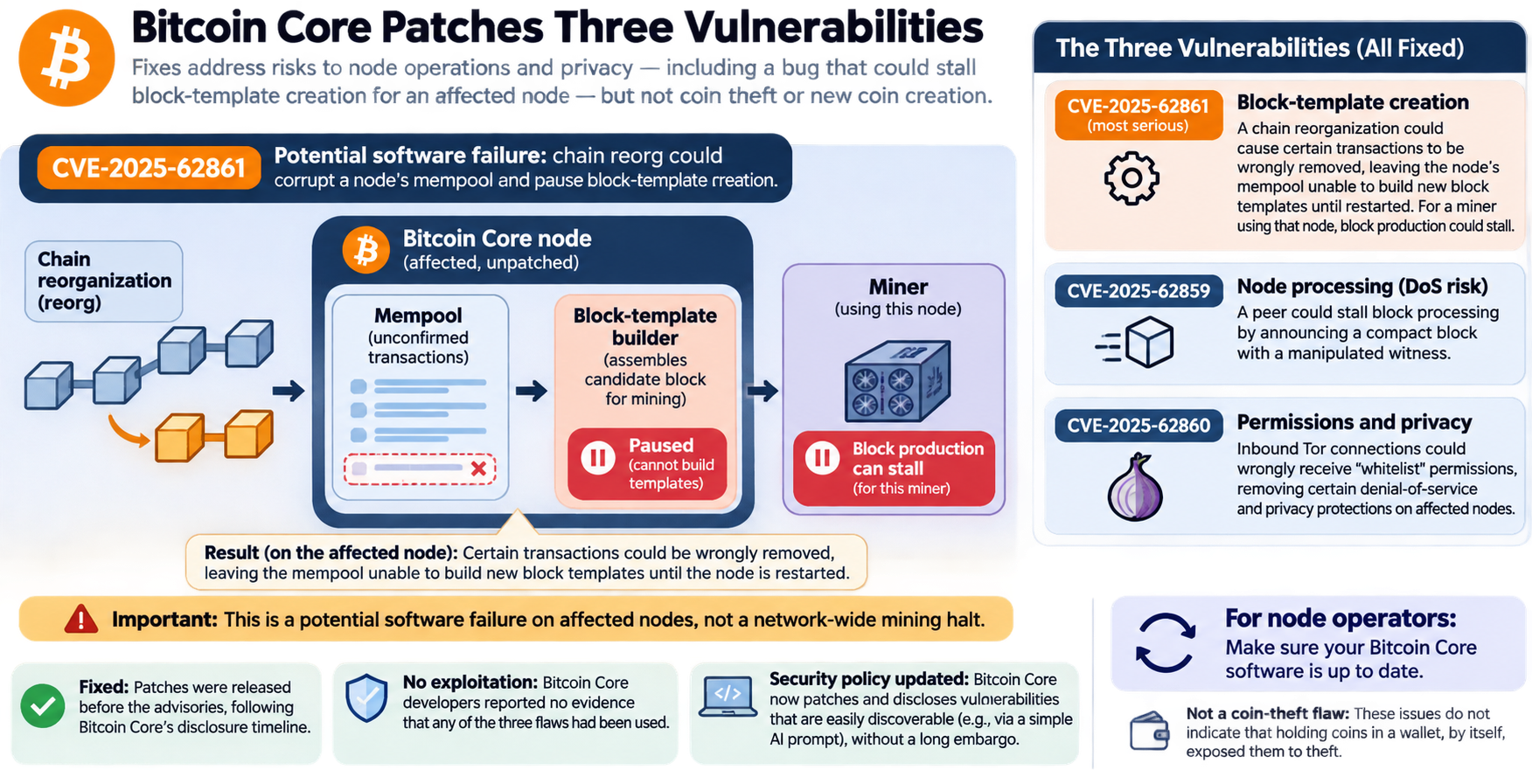
- CVE-2025-62859: A peer could stall block processing by announcing a compact block with a manipulated witness.
- CVE-2025-62860: Inbound Tor connections could wrongly receive “whitelist” permissions, removing certain denial-of-service and privacy protections on affected nodes.
Bitcoin Core developers reported no evidence that any of the three flaws had been exploited. The fixes were released before the advisories, in line with Bitcoin Core’s disclosure timeline. Decrypt also reported that Bitcoin Core had revised its security policy to patch and disclose vulnerabilities considered easily discoverable through a simple AI prompt without a long embargo.
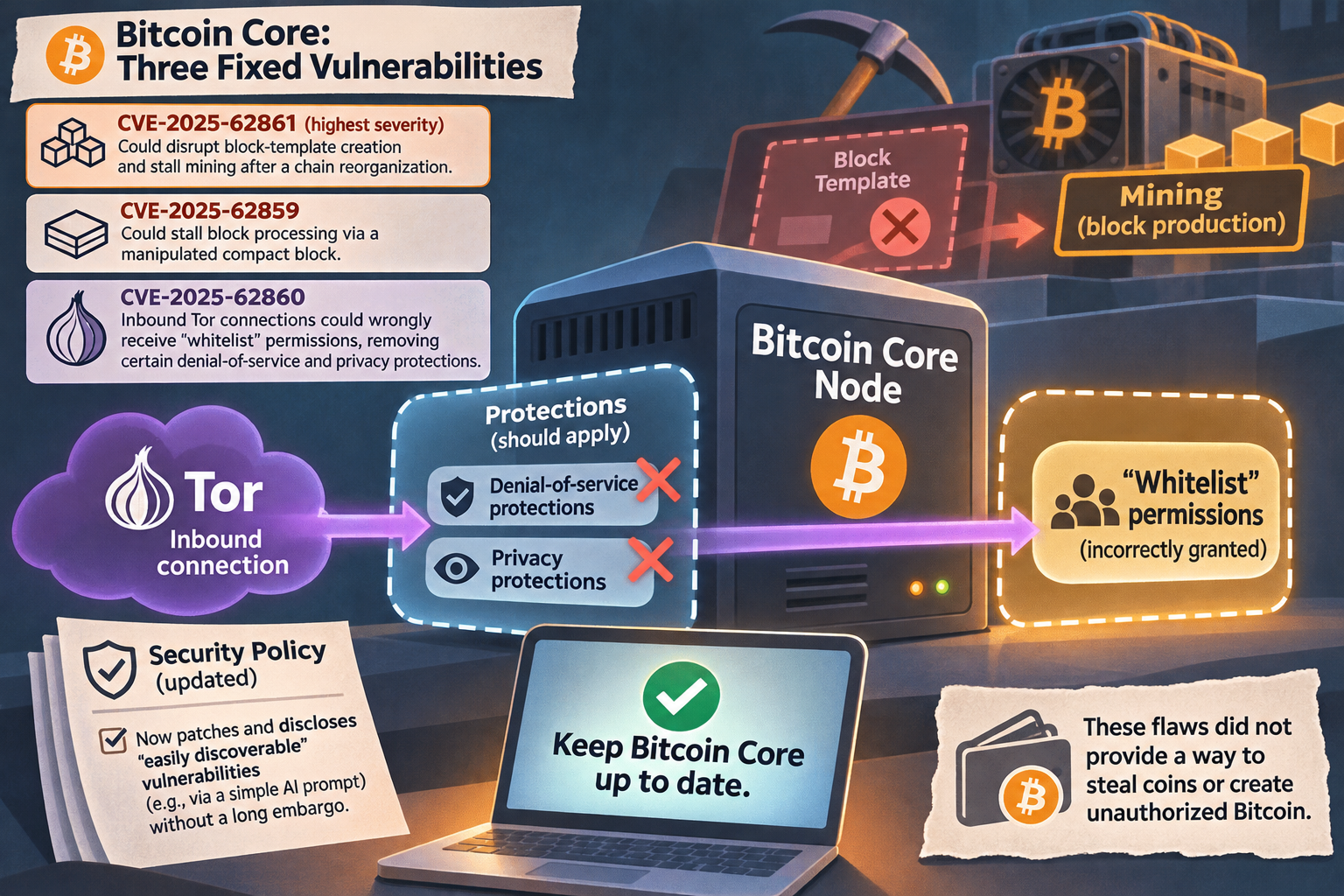
For people operating nodes, the practical check is whether their Bitcoin Core software is up to date. These disclosures do not indicate that holding coins in a wallet, by itself, exposed them to theft through these flaws.
Source: decrypt.co (originally published 2026-11-12 00:58 UTC+8)