If you hold assets in an Ethereum wallet, the question behind account abstraction is simple: what exactly are you authorizing when you sign? A more programmable account could make transactions easier, but it can also make the boundaries of that authorization harder to see.
In an account published on November 20, 2026, wallet provider imToken explained why it was taking a cautious approach to two account-abstraction routes, EIP-7702 and ERC-4337, while shifting research toward native account abstraction. These are imToken’s product decisions and security assessments, not a claim that either route is inherently unsafe.
Why change the account model?
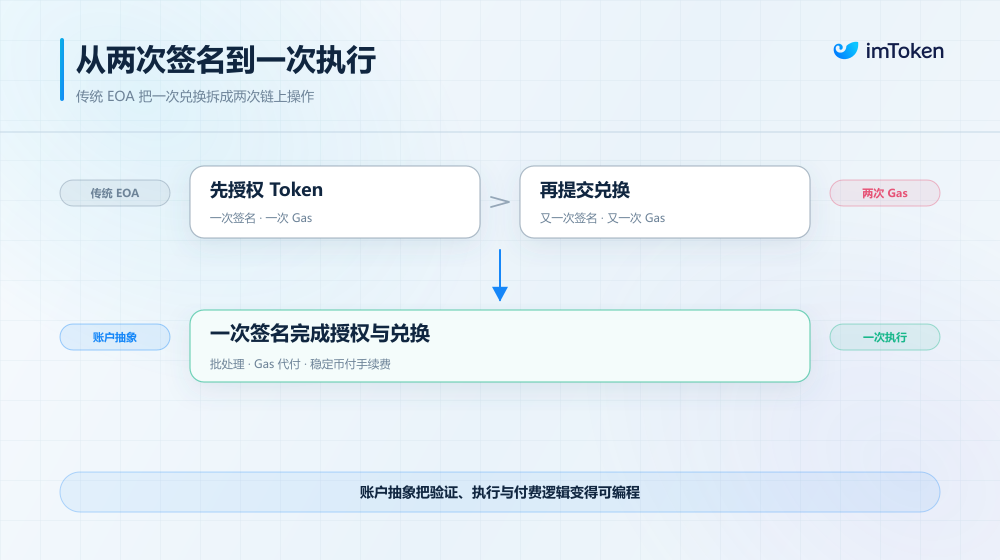
A conventional externally owned account (EOA) is controlled by a private key. Its rules are relatively straightforward, but the model offers limited flexibility: an ERC-20 swap may require a separate approval and swap transaction, each with its own signature and gas payment. Account abstraction aims to make validation, execution and fee payment programmable, enabling capabilities such as batched actions and third-party payment of gas.
That flexibility changes what a wallet needs to explain. A confirmation might authorize more than a single transaction; depending on the design, it could affect the code or permissions governing later account activity.
EIP-7702: check the delegation
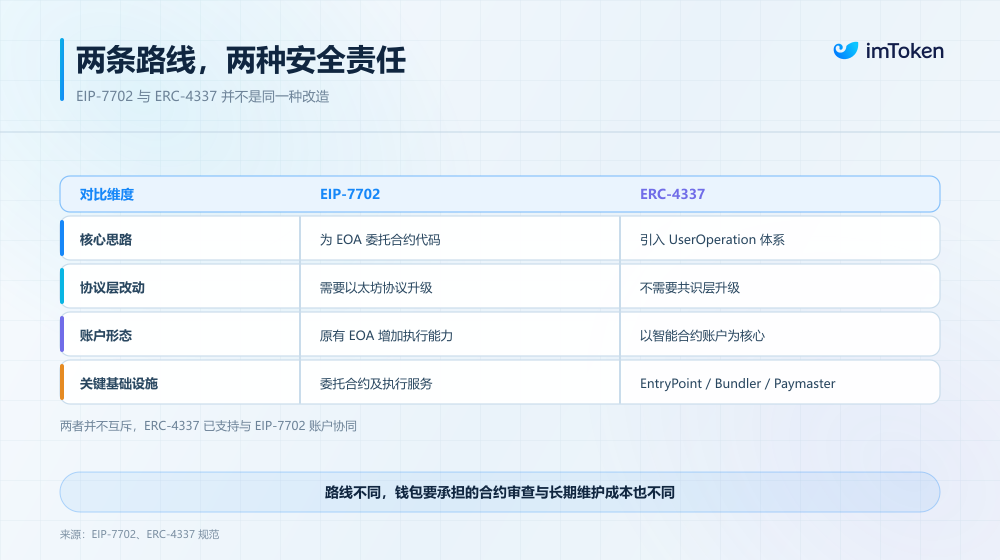
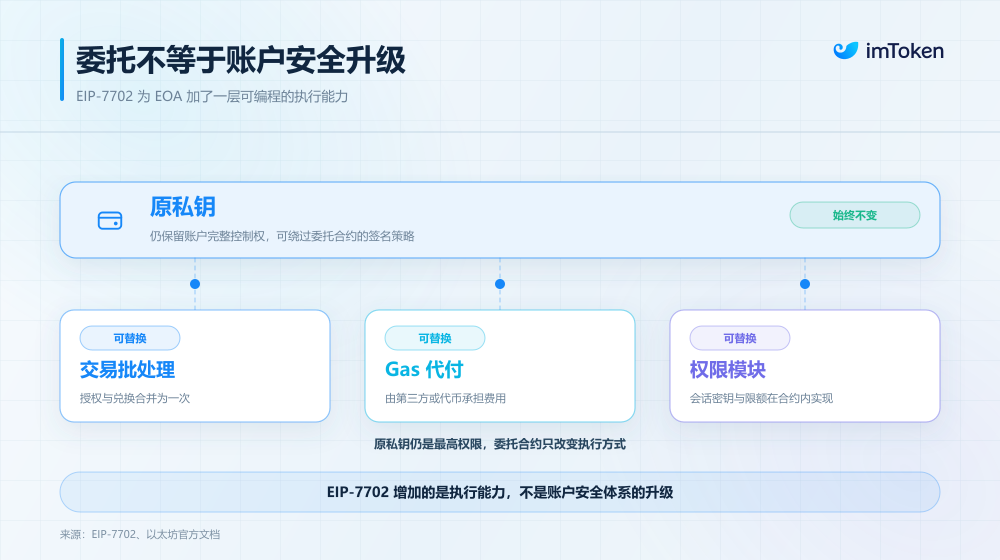
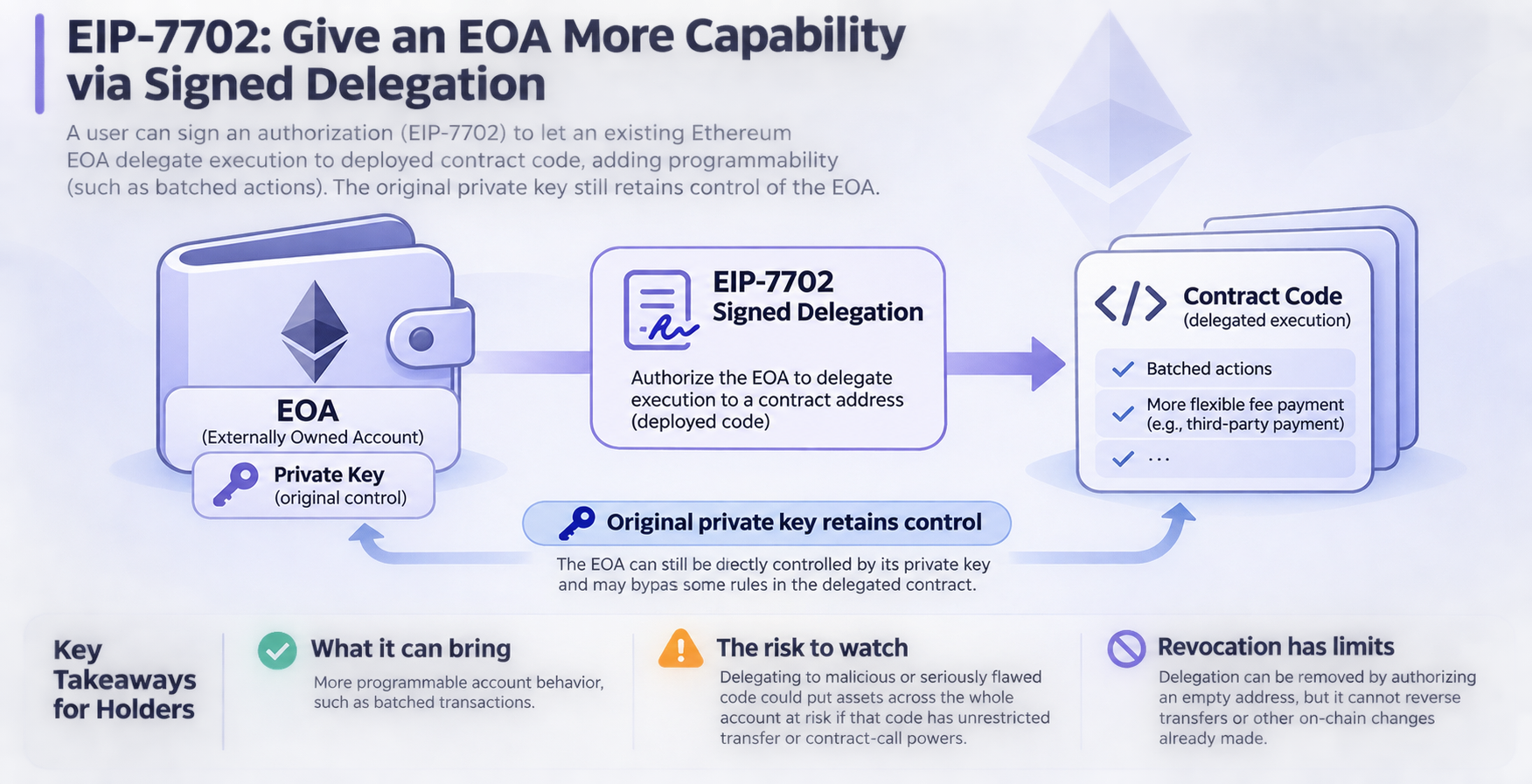
EIP-7702, which imToken said had reached Ethereum mainnet, lets an EOA delegate execution to deployed contract code through a signed authorization. Carefully designed code can add features such as batching. But imToken warned that delegation to malicious or seriously flawed code could put assets across the account at risk if that code has unrestricted transfer or contract-call powers.
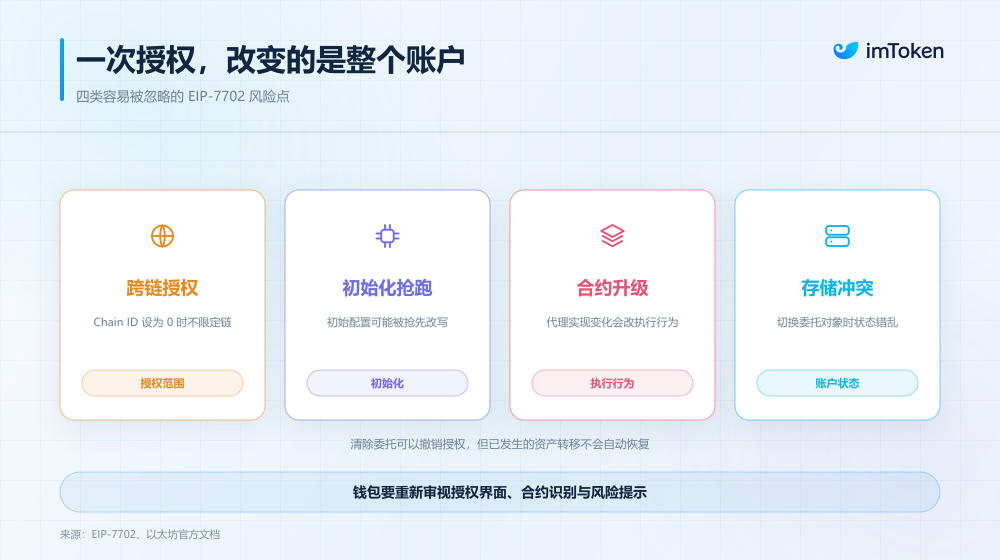
This differs from a typical token approval, whose scope is generally defined by a token, allowance and spender—though an unlimited token approval can also cause severe losses. Under EIP-7702, the original private key retains control of the EOA and may bypass some rules in the delegated contract. Delegation can be removed by authorizing an empty address, but removal cannot reverse transfers or other on-chain changes already made.
For a holder, the practical distinction is to recognize an account delegation as different from an ordinary transaction or token approval. imToken said wallets need clear contract identification, permission displays, revocation controls and risk warnings before presenting that authorization to users.
ERC-4337: more components to assess
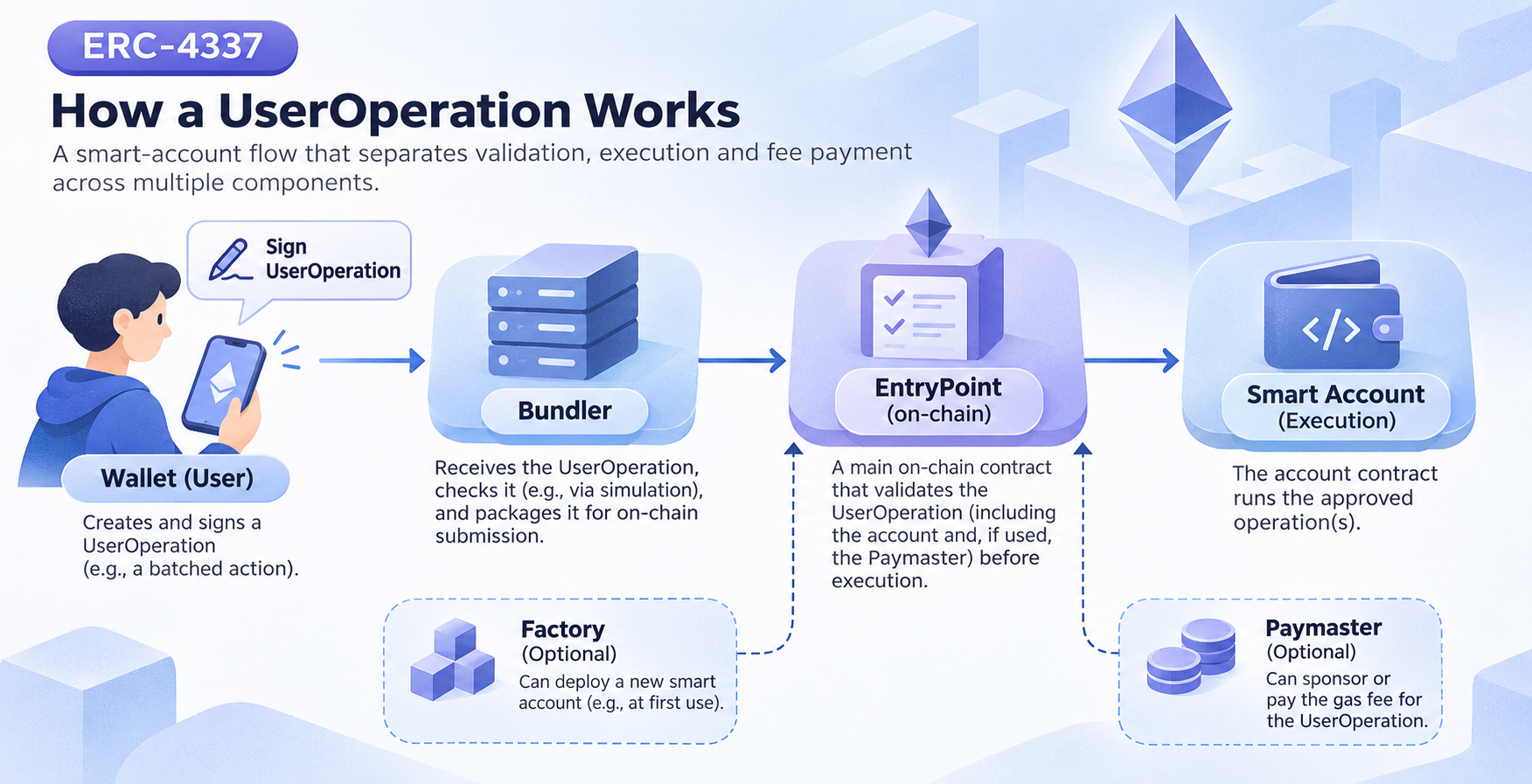
ERC-4337 uses a smart-account architecture rather than adding delegation to an existing EOA. A wallet signs a UserOperation; a Bundler checks and submits it through the on-chain EntryPoint, which validates it before execution. A Paymaster may handle sponsored fees, while a Factory may deploy a new account.
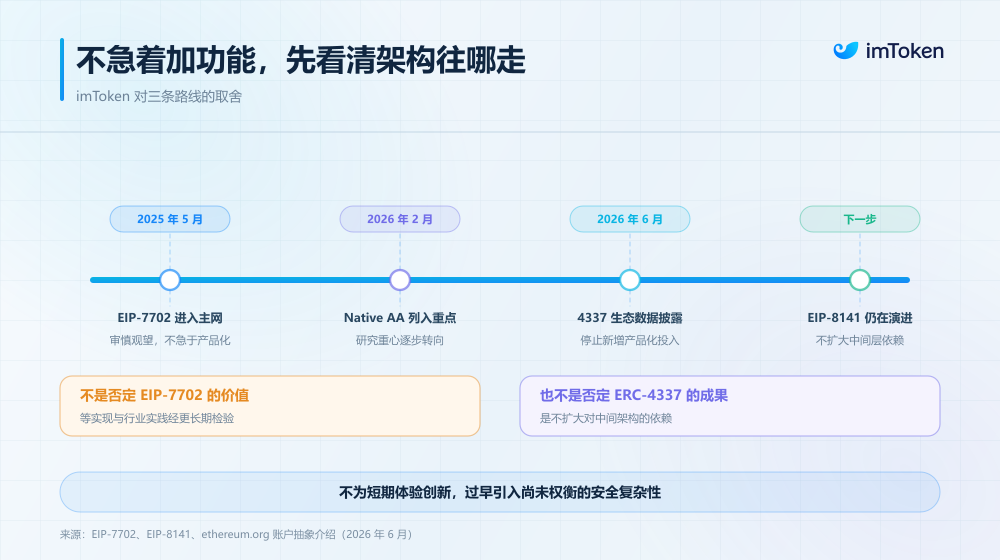
ImToken said this architecture has demonstrated the feasibility of smart accounts in production, but its contracts, modules, infrastructure and version choices create ongoing security, reliability and compatibility work. The provider said it had stopped new ERC-4337 productization investment—not that ERC-4337 had been discontinued—and was gradually moving its research focus to native account abstraction. It also said it was watching EIP-7702 rather than rushing to introduce it broadly. The two approaches are not mutually exclusive: ERC-4337 has added support for EIP-7702.
Native AA remains a direction, not a finished safeguard
According to imToken, the Ethereum Foundation named native account abstraction as a priority under its user-experience work in February 2026. ImToken identified EIP-8141, or Frame Transactions, as one proposed path for separating validation, fee authorization and execution. As of the November 20, 2026 account, EIP-8141 was still a draft, not a deployed replacement for existing wallet arrangements.
The custody lesson is not that programmable accounts remove the need to protect a private key—or that simpler accounts have no risks. It is to understand the scope of each signature, especially when it delegates account behavior, and not to assume a later revocation can undo an action already executed.