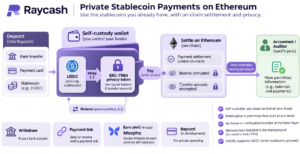
For people holding crypto, a privacy tool also has to make keys manageable and work with the devices they use. An Ethereum stealth address working group plans to tackle those challenges, but the proposed changes are not yet completed.
As reported on 18 November 2026, Ethereum Foundation privacy team member Pierre said the group would bring together engineering teams to address cryptographic and usability challenges for stealth addresses. Its goals include post-quantum security, new key-storage designs, hardware wallet integration and wider adoption.
According to the group’s website, it meets every two weeks. Its plans include upgrading the ERC-5564 stealth address standard with a hybrid ML-KEM approach and building a second independent implementation to help move the standard toward final status. The group also plans a mainnet singleton key store for key rotation and metadata management, alongside work to standardize key storage and integrate stealth addresses with hardware wallets.
The website lists the Ethereum Foundation, Umbra developer ScopeLift, privacy wallet Fluidkey and hardware wallet maker Trezor as participants. These are stated plans and goals, not evidence that the upgrades or integrations are already available.