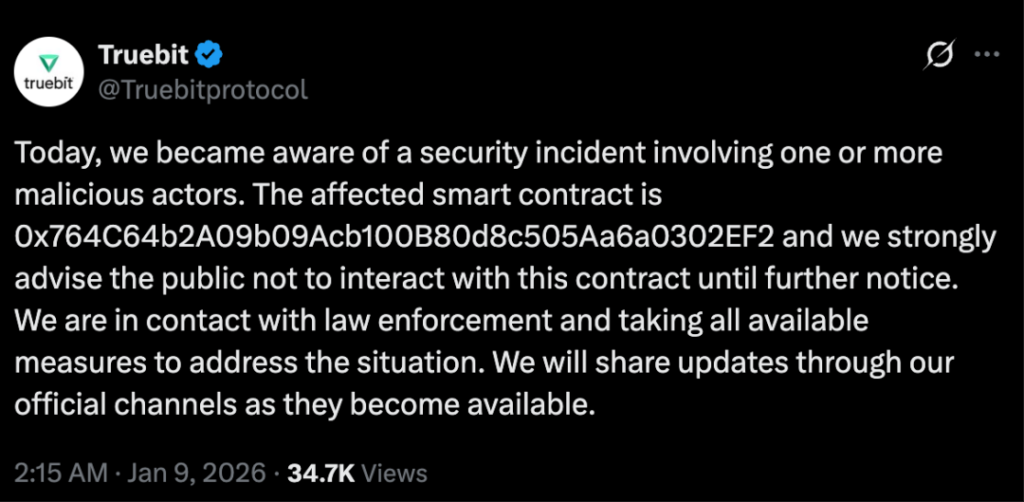
For anyone holding tokens backed by a smart-contract reserve, the question is whether the contract can reliably enforce the price of minting and redemption. In an analysis published on January 12, 2026, SlowMist reported that an attacker exploited a pricing flaw in Truebit Protocol’s Purchase contract on January 8. Its tracking tool, MistTrack, estimated the attacker’s proceeds at about 8,535 ETH, or $26.44 million.


What went wrong
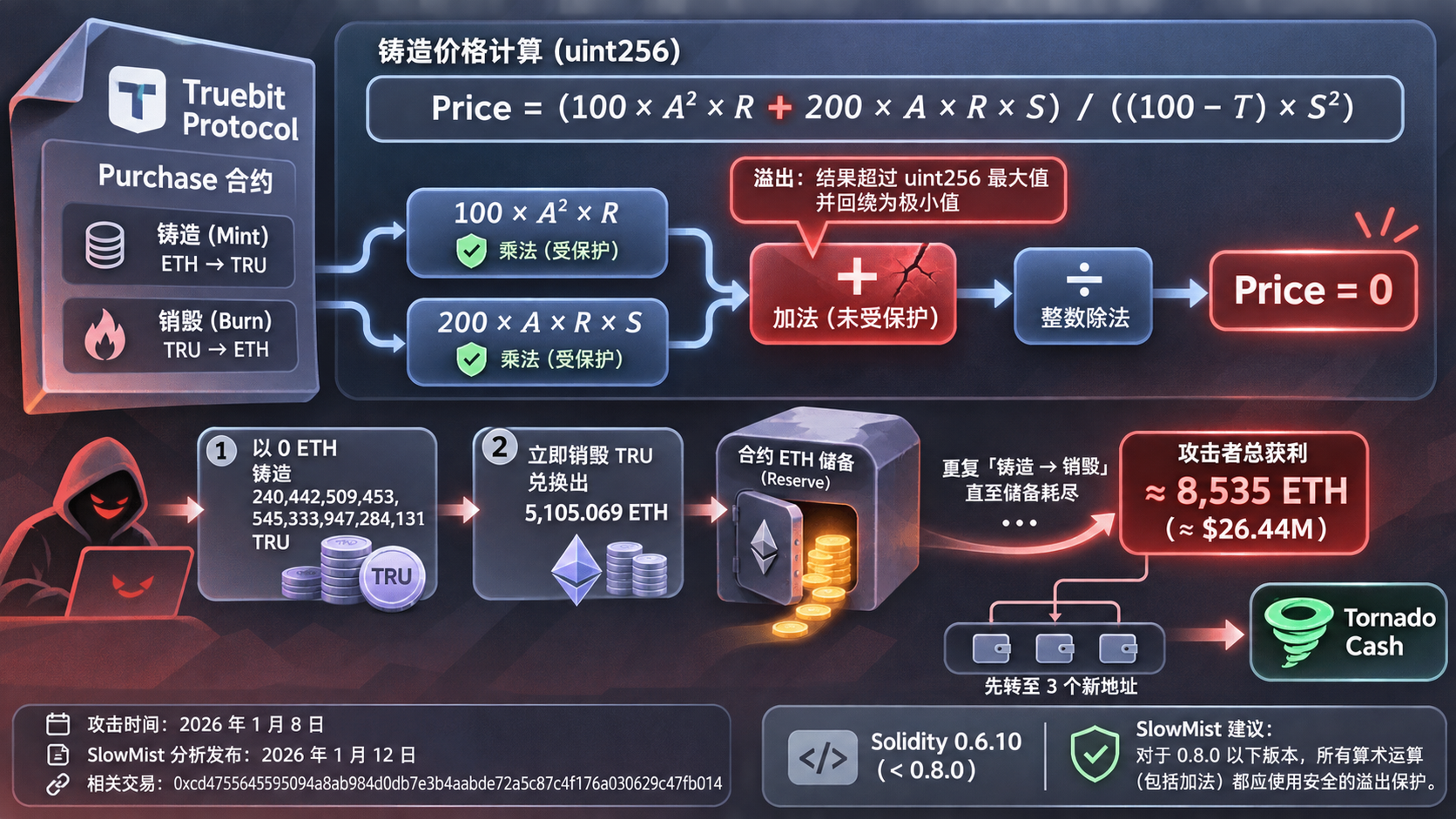
Truebit’s Purchase contract accepted ETH to mint TRU and paid ETH from its reserve when TRU was burned. According to SlowMist’s analysis of the contract, its minting-price calculation checked multiplication for overflow but left an addition in the numerator unchecked. The contract was compiled with Solidity 0.6.10, before arithmetic overflow checks became built in.

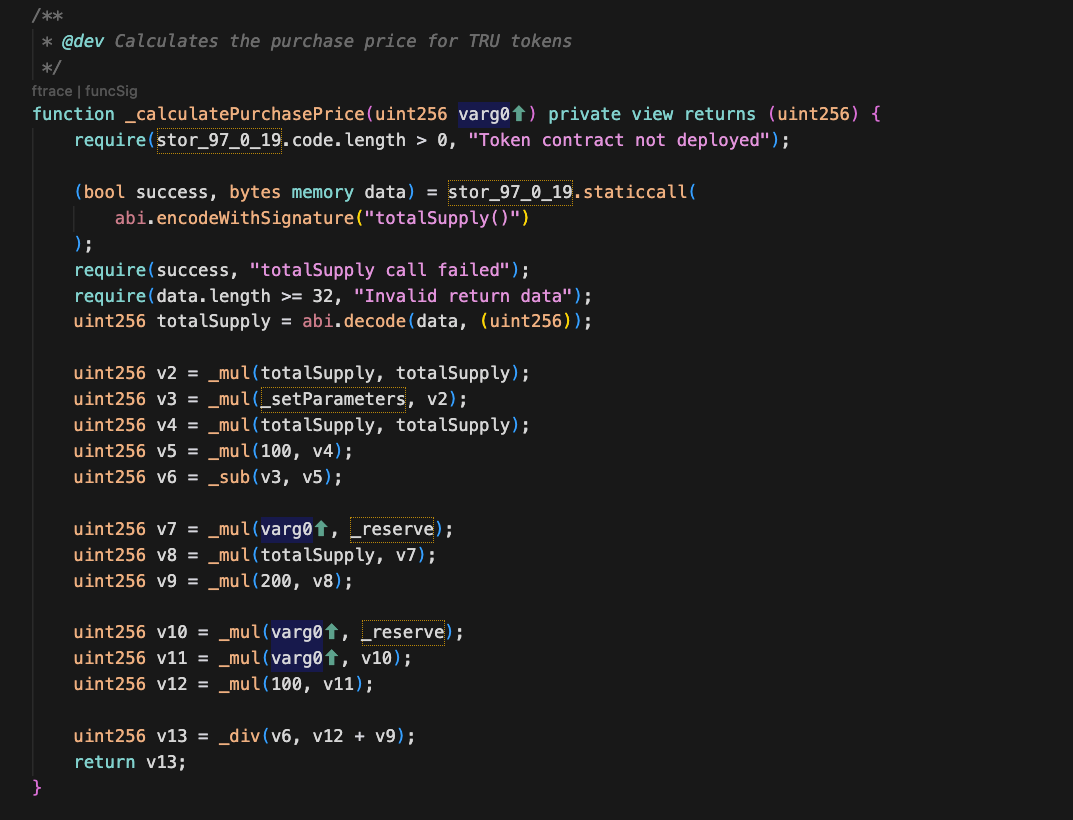

SlowMist said the attacker chose a mint amount that caused that addition to overflow. The resulting small numerator was reduced to zero by integer division, so the contract quoted no ETH for minting 240,442,509,453,545,333,947,284,131 TRU. The attacker then burned those tokens for 5,105.069 ETH from the reserve. SlowMist reported that the attacker repeated the mint-and-burn process; later mints required some ETH, but the process continued until the reserve was exhausted.


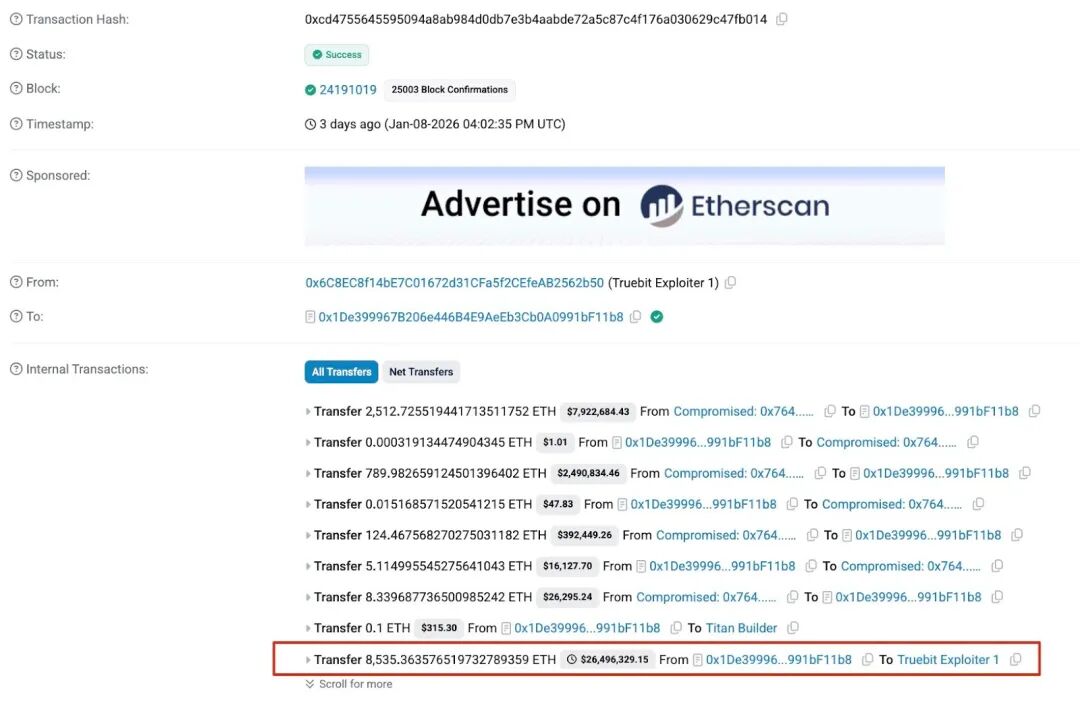
The transaction identified in the analysis is 0xcd4755645595094a8ab984d0db7e3b4aabde72a5c87c4f176a030629c47fb014.
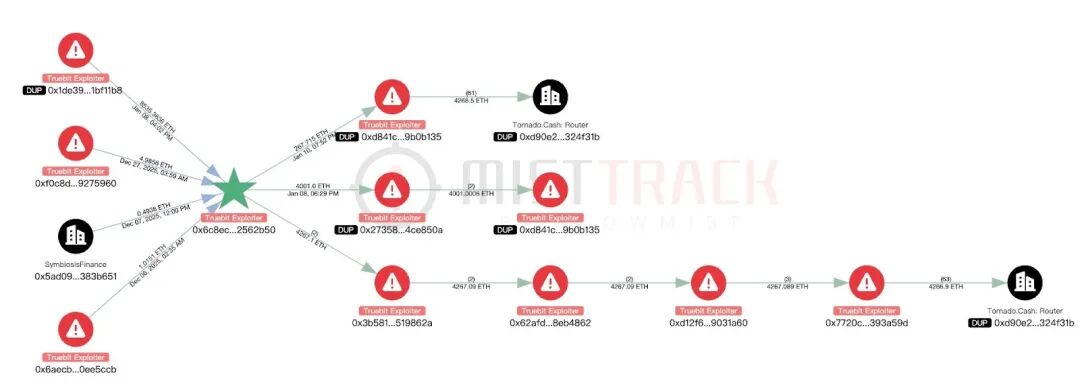
Where the funds went
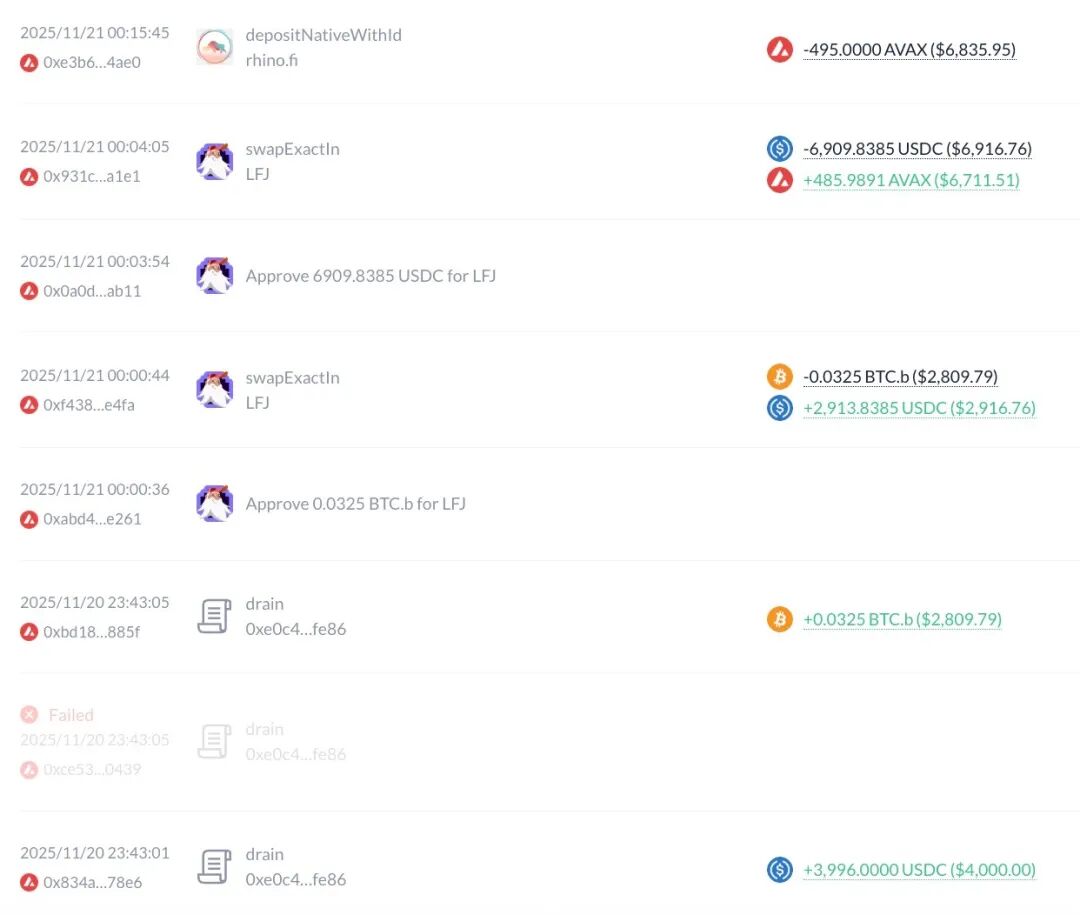
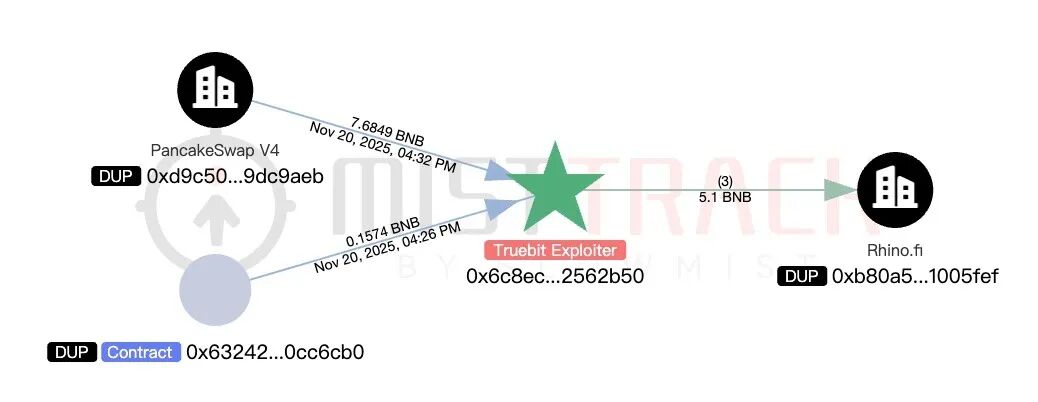
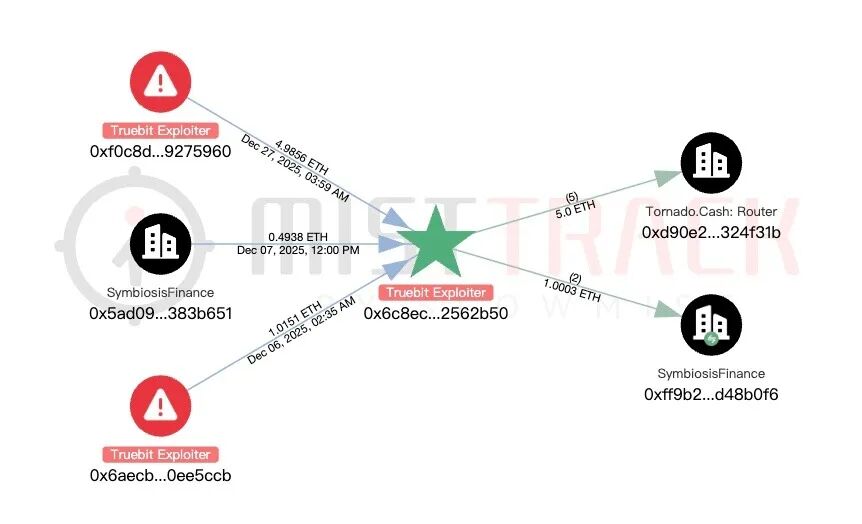
MistTrack reported that the approximately 8,535 ETH first moved to three new addresses and ultimately entered Tornado Cash. It also identified earlier transactions involving the attacker address. MistTrack described a December 27, 2025, receipt of 4.98 ETH through RUN as possibly connected to another attack; that connection was not established in its account.

This was a contract-pricing failure, not a reported compromise of holders’ wallet keys. The practical distinction is that careful key custody cannot correct a flaw in a contract that sets the terms for minting and redeeming an asset. SlowMist’s recommendation to developers was to protect all arithmetic operations in contracts using Solidity versions before 0.8.0, rather than checking multiplication while leaving addition exposed.