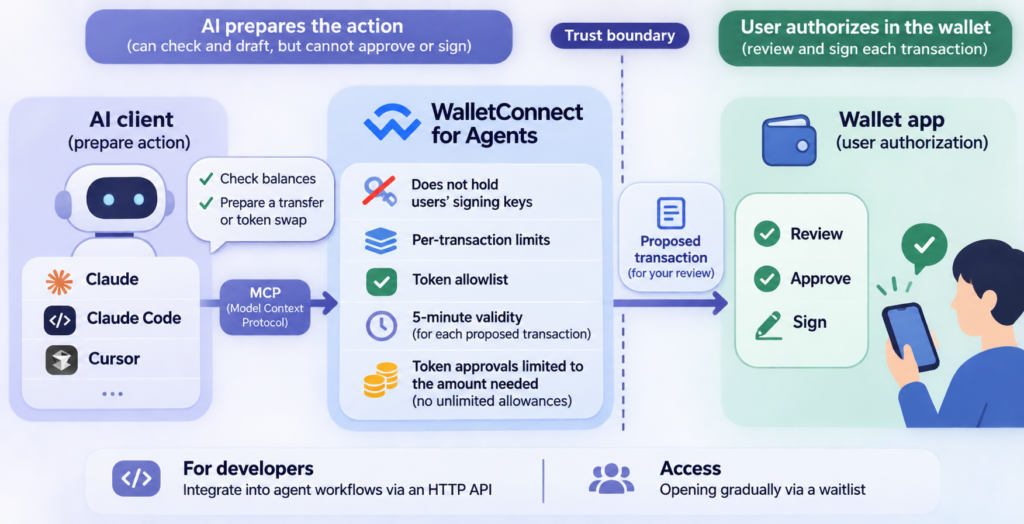
If an AI client can prepare a transfer, the key custody question is who approves it. In a report published on November 19, 2026, WalletConnect announced WalletConnect for Agents, a service that lets clients including Claude, Claude Code and Cursor connect to a user’s existing wallet through the Model Context Protocol (MCP). The clients can check balances and prepare transfers or token swaps, but each transaction still requires the user to approve and sign it in the wallet app.
WalletConnect says the service does not hold users’ signing keys. It also says it applies per-transaction limits, supports a token allowlist and gives each proposed transaction a five-minute validity period. Token approvals are limited to the amount needed for a transaction rather than unlimited allowances.
Developers can integrate the functions into agent workflows through an HTTP API. At the time of the report, access was being opened gradually through a waitlist. For users, the distinction is between an AI client preparing an action and the wallet authorizing it: the proposed transaction still needs to be reviewed before signing.