
For anyone holding ETH, the practical question is whether today’s accounts could be moved safely if cryptographic threats change. A roadmap published by nonprofit Ethereum research lab Ethlabs proposes making Ethereum ready for quantum-resistant accounts by 2027. It is a community proposal, not an upgrade that has been approved or deployed.
In its pqai27 proposal, reported on November 12, 2026, Ethlabs set out two goals:
- “pqai-ready” would make the consensus layer quantum-resistant and enable users to migrate to quantum-resistant accounts through the proposed Frames account-abstraction mechanism, EIP-8141. Ethlabs also proposed a fallback using calldata to keep the network operating if existing cryptography failed earlier than expected.
- “pqai-scaled” would aim to restore normal throughput at full network load for quantum-resistant transactions and blobs. The proposed components include signature aggregation under EIP-8288 and quantum-resistant data availability under EIP-8479.
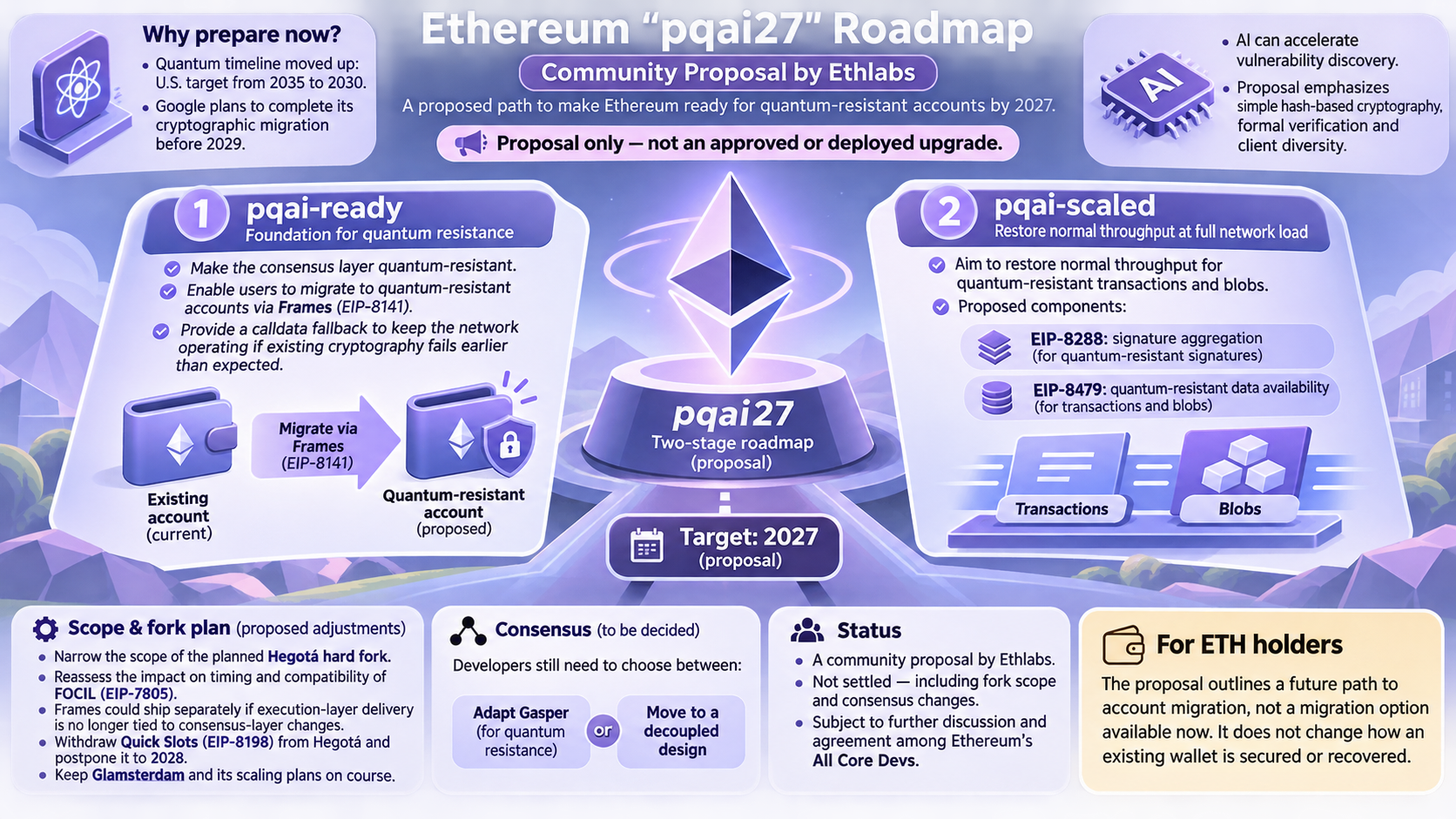
Ethlabs argued that the preparation window is narrowing, citing a U.S. government quantum-resistance target moved from 2035 to 2030 and Google’s stated plan to complete its cryptographic migration before 2029. It also pointed to AI-assisted vulnerability discovery as a reason to emphasize simple hash-based cryptography, formal verification and client diversity. These are the proposal’s rationale, not evidence that Ethereum accounts have already been compromised by either threat.
To make room for the work, Ethlabs suggested narrowing the scope of the planned Hegotá hard fork and reassessing how the censorship-resistance proposal FOCIL, EIP-7805, might affect timing and compatibility. It said Frames could arrive separately if execution-layer delivery were no longer tied to consensus-layer changes. On consensus, developers would still need to choose between adapting Gasper and moving to a decoupled design. Ethlabs said it was withdrawing its Quick Slots proposal, EIP-8198, from Hegotá and postponing that effort to 2028; it proposed leaving Glamsterdam and its scaling plans on course.
None of those fork or consensus changes was settled in the report. They remained subject to discussion and agreement among Ethereum’s All Core Devs. For holders, the distinction is between a proposed path to future account migration and a migration option available now; the proposal does not itself change how an existing wallet is secured or recovered.