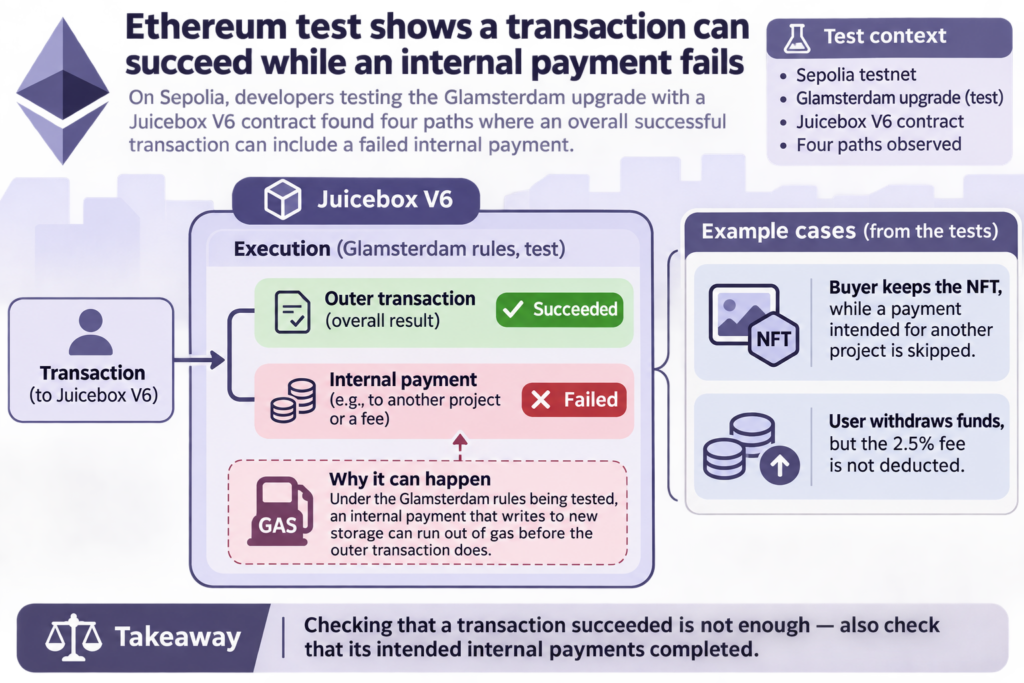
A successful transaction does not necessarily mean every payment inside it went through. In a November 17, 2026 report, PANews, citing CryptoSlate, described a Sepolia test of Ethereum’s Glamsterdam upgrade in which a transaction succeeded overall while an internal payment operation failed.
Developers simulated the behavior using a Juicebox V6 contract and found four paths where it could occur. In one example, a buyer retained an NFT while a payment intended for another project was skipped. In another, a user withdrew funds without the 2.5% fee being deducted.
The developers attributed the behavior to gas consumption during execution: under the Glamsterdam rules being tested, an internal payment that writes to new storage can run out of gas before the outer transaction does. These were testnet findings, not reported losses. The practical distinction is between checking that a transaction succeeded and checking that its intended internal payments completed.