If you keep a wallet on an iPhone, one practical question is whether another app can read files your wallet left on the device. A short reminder published on November 10, 2026, speaks to that boundary without claiming that assets are taken automatically.
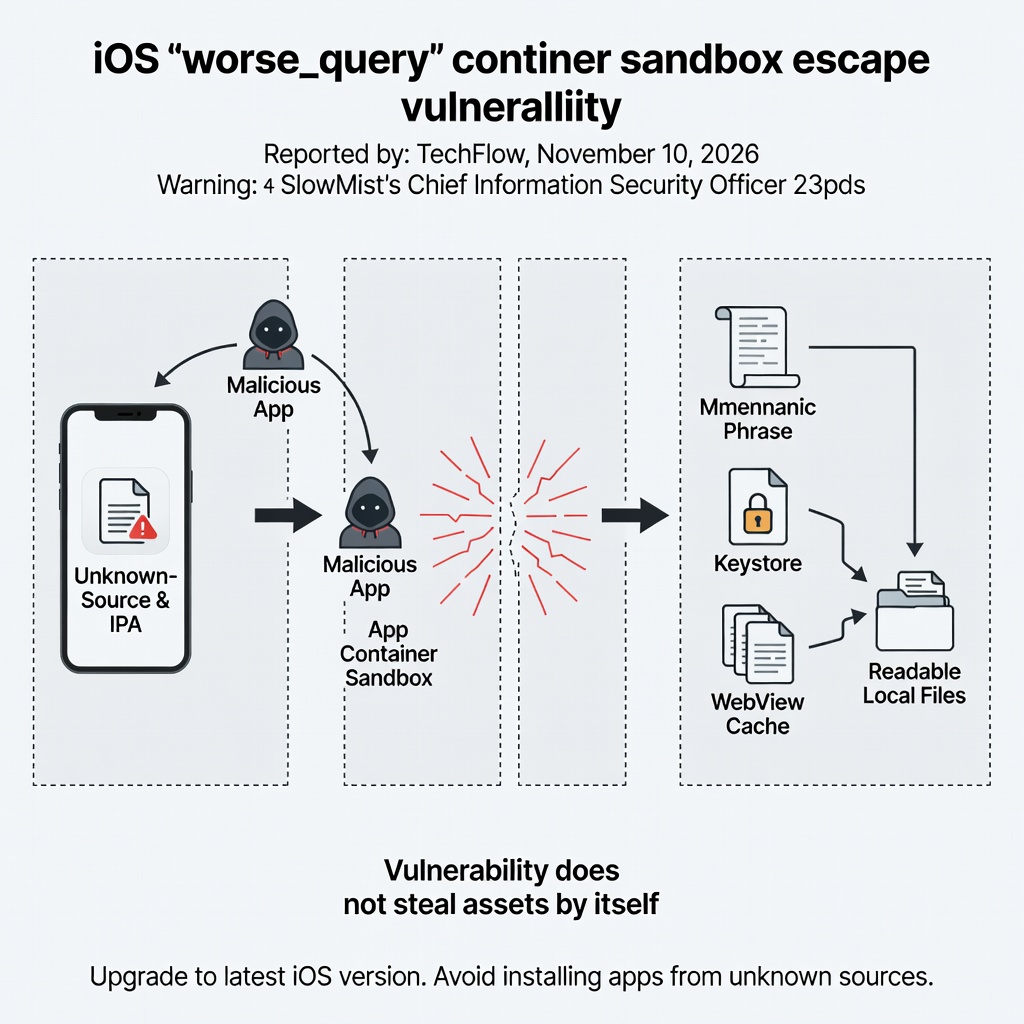
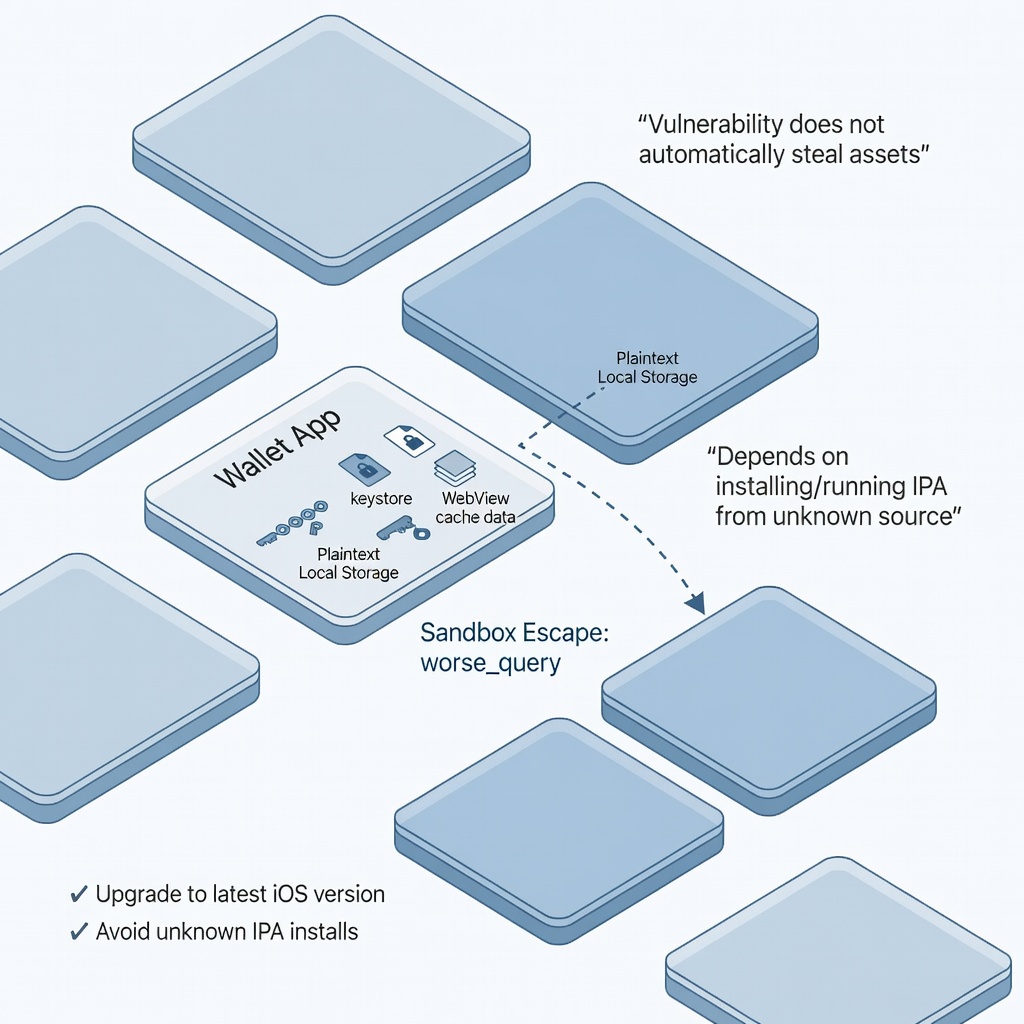
TechFlow reported that day, at 11:03 (UTC+8), on a post from SlowMist chief information security officer 23pds. He described an iOS issue named worse_query as a container sandbox escape, not a jailbreak. In his account, it may break the data isolation that normally separates one application’s container from another.
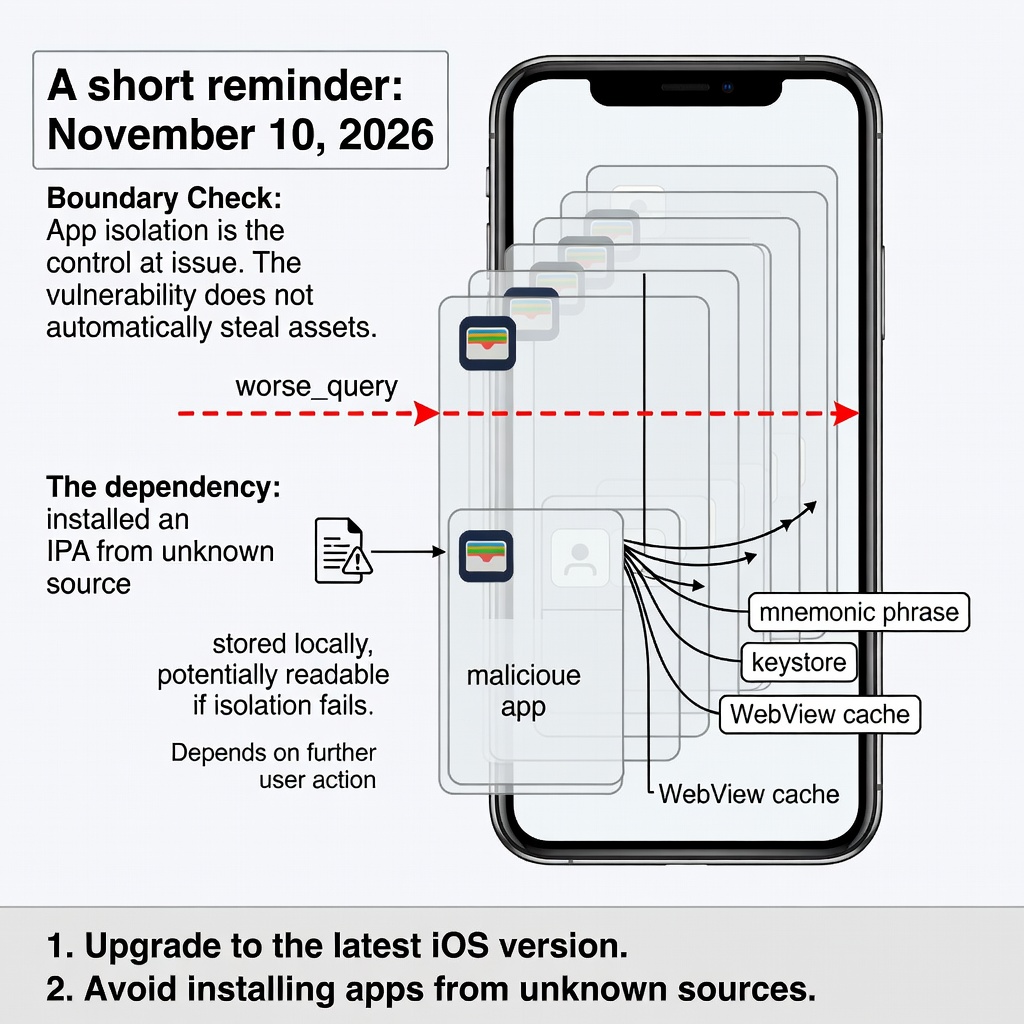
He drew a limit around what the issue does by itself. The vulnerability does not automatically steal assets. The exposure he described depends on a further step: a person installs and runs an IPA from an unknown source. A malicious app may then be able to read other apps’ containers. If a wallet has stored a mnemonic phrase, a keystore, or WebView cache in plaintext on the device, that material could be read.
Read as a custody note, this is a confidentiality problem under a specific condition, not an automatic loss. App isolation is the control at issue. Plaintext local storage means those items are not protected by encryption inside the container if another app can open it. The reminder does not say that every wallet stores secrets this way. It also does not report confirmed thefts or a loss amount.
The checks he suggested stay narrow: upgrade the system to the latest version, and avoid installing apps from unknown sources. Those are habits a holder can apply without changing how recovery materials are backed up, and they do not remove every risk of local data exposure.
Original report: TechFlow, November 10, 2026