Approving a signature is one of the last moments a holder can still refuse a harmful wallet prompt. A report published on November 11, 2026 attaches a number to how often one wallet raised that kind of warning, and it also limits what the number can mean.
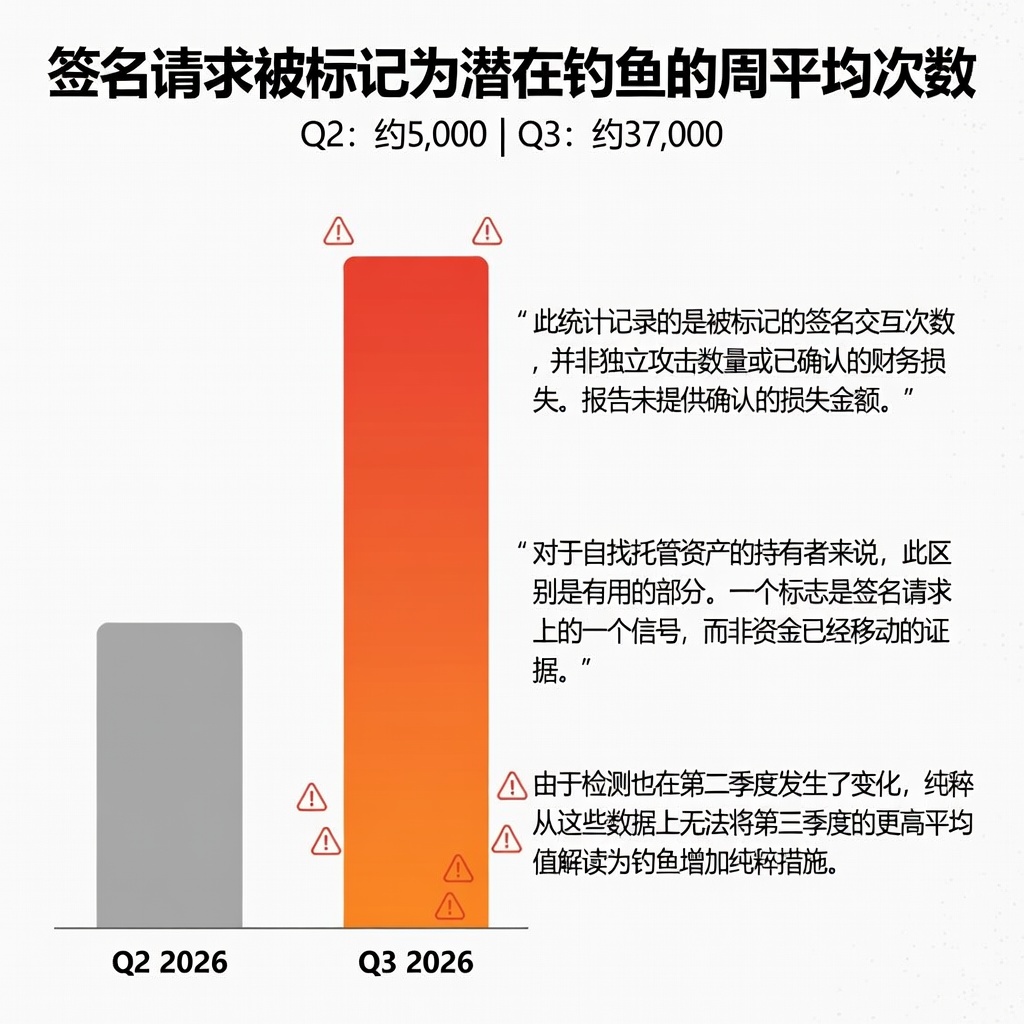
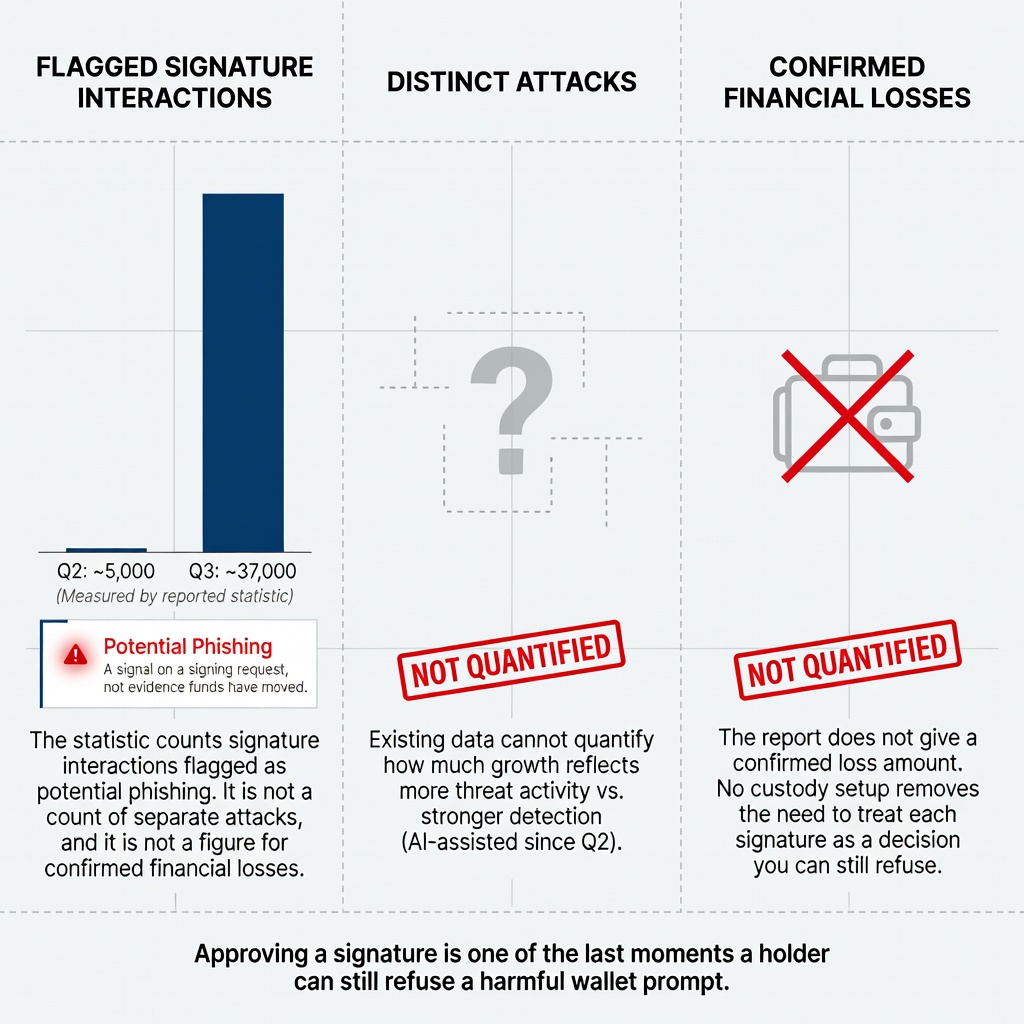
TechFlow, citing Cointelegraph, reported comments from Bitget Wallet chief operating officer Alvin Kan. He said that in the third quarter of 2026 the wallet flagged an average of about 37,000 signature requests a week as potential phishing. The second-quarter figure given in the same comparison was about 5,000; the report states the weekly average for the third quarter and does not repeat that weekly wording for the second-quarter figure.
Kan said the growth may reflect both more threat activity and stronger detection. Existing data cannot quantify how much each factor contributed. Bitget Wallet introduced AI-assisted risk detection in the second quarter.
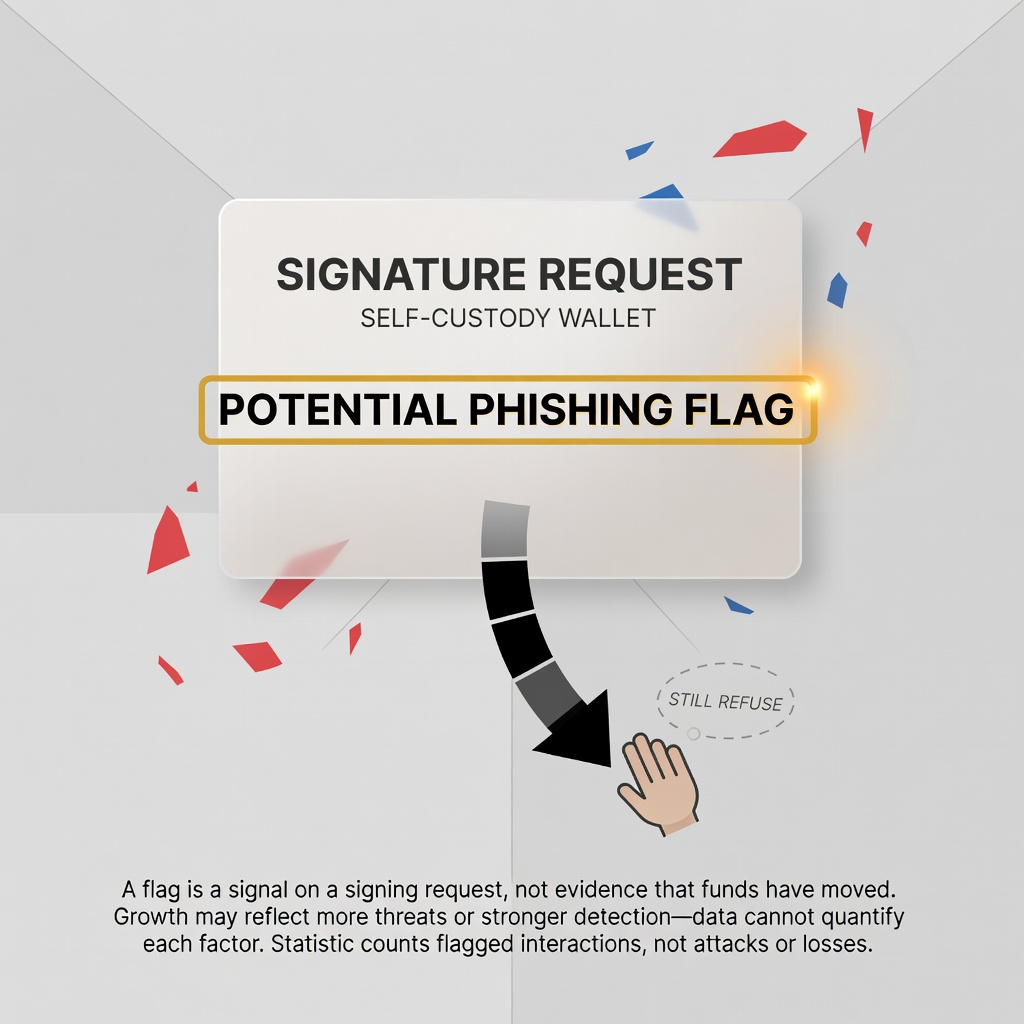
The statistic counts signature interactions that were flagged. It is not a count of separate attacks, and it is not a figure for confirmed financial losses. The report does not give a confirmed loss amount.
For someone holding assets in self-custody, that distinction is the useful part. A flag is a signal on a signing request, not evidence that funds have already moved. Because detection also changed in the second quarter, the higher third-quarter average cannot, on these figures alone, be read as a pure measure of how much phishing increased. No custody setup described here removes the need to treat each signature as a decision you can still refuse.
Original article (TechFlow, November 11, 2026)